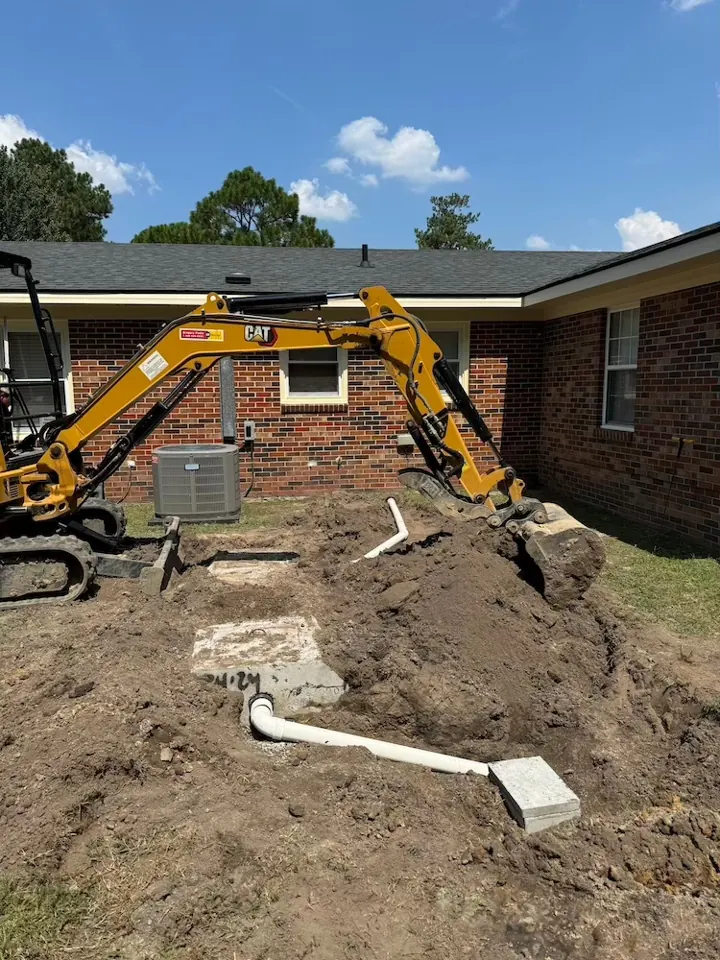
When does a septic tank need to be replaced?
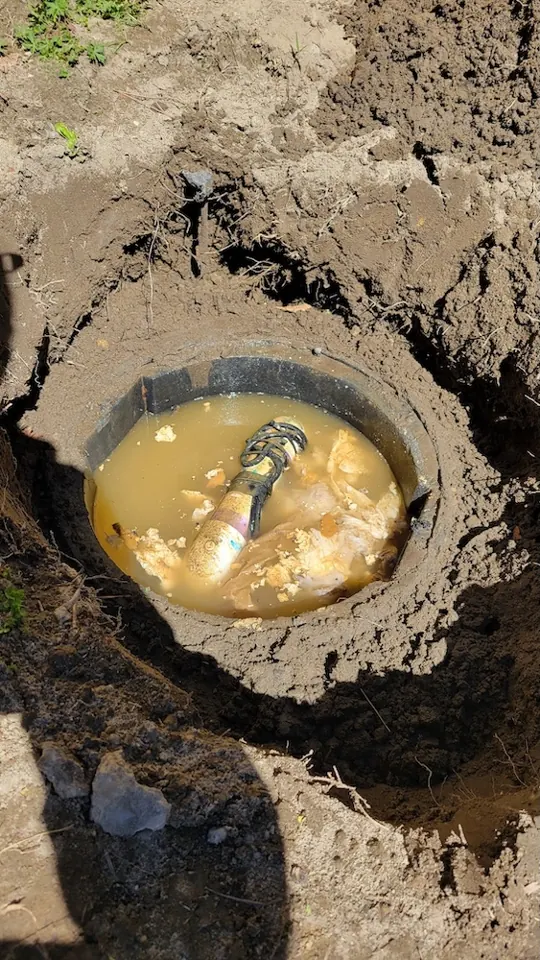
When the tank itself is broken: cracked walls, a collapsed lid, rusted out steel, failed baffles, or roots and groundwater getting in. A tank that fills up fast after pumping usually means the field is the problem, not the tank.
If your house is older, the tank may well be the one it was built with. Concrete tanks can last a long time. Steel tanks and tanks set without proper bedding usually do not. The only way to know is to open the lids and look.
How can you tell a tank problem from a field problem?
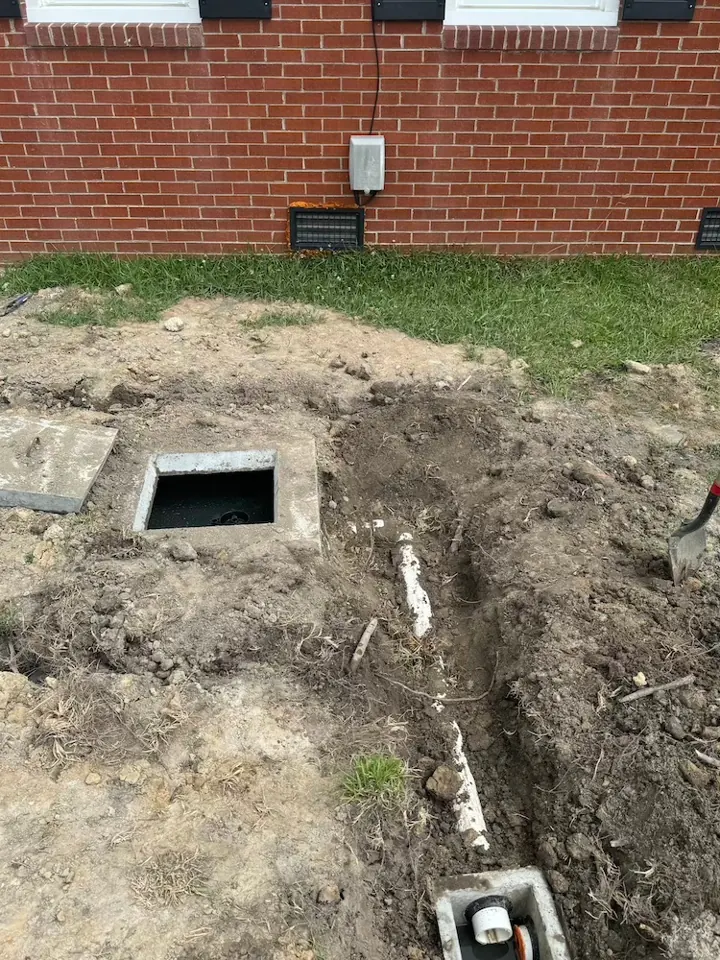
Look at where the water goes. A tank problem shows up at or near the tank: sinking soil over the lid, a smell at the tank, or a tank that will not hold its level. A field problem shows up over the lines: soggy ground, green stripes, or sewage at the surface.
| What you see | Most likely cause | Read more |
|---|---|---|
| Ground sinking around the lid | Cracked or collapsing tank | This page |
| Tank level drops below the outlet | Leaking tank wall or seam | This page |
| Soggy ground or odor over the field after rain | Field no longer taking water | Drain field |
| Backup that returns soon after pumping | Field, sometimes both | Drain field |
| Alarm light or buzzer on a panel | Pump tank problem | Pump tank |
If sewage is backing into the house, stop running water and call. That is a cleanup and health problem before it is a construction one.
What happens during a septic tank replacement?
Permit, pump out, remove or abandon the old tank, set the new one level on firm bottom, reconnect inlet and outlet, and have the county inspect before backfill.
Inspect and find the cause
We open the tank, check the baffles and walls, and look at the field before we recommend anything.
Permit
The county issues a construction permit. Rule 511-3-1-.03(2) requires one before installation.
Pump the old tank
A licensed pumper empties it so it can be removed or filled safely.
Set the new tank
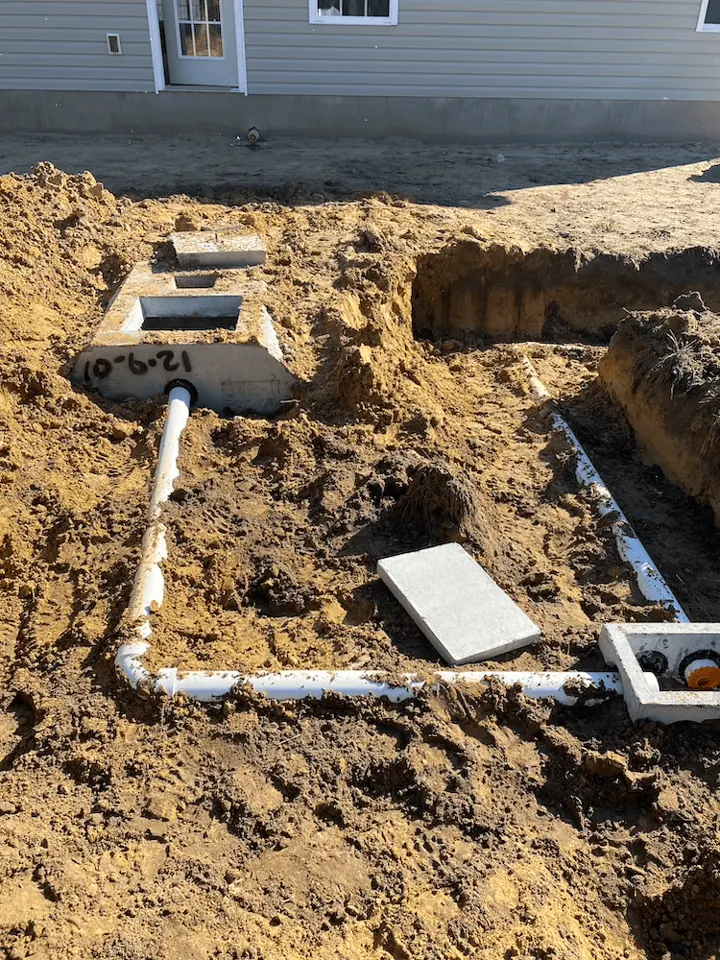
The hole is shaped, the bottom firmed, and the new tank set level so the inlet sits higher than the outlet.
Reconnect and add risers
New inlet and outlet connections. The Augusta Engineering Department’s septic guide recommends a watertight concrete riser over the tank to make future access easier.
Inspection, then backfill
Rule 511-3-1-.03(4) bars backfilling or using the system until the final inspection is done.
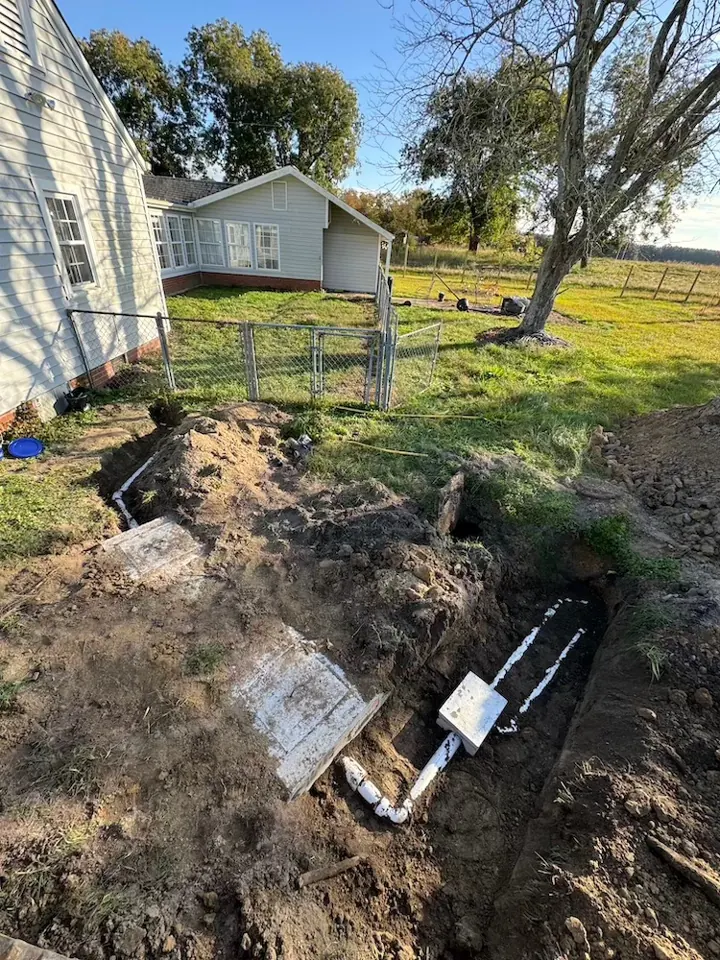
Most of the work is in the details you never see afterward: a bedding layer so the tank does not settle and tip, inlet and outlet connections that stay watertight as the ground moves, and backfill placed in lifts rather than shoved in all at once. Skipping any of those is how a new tank ends up with a sunken lid a few years later.

Does a replacement tank have to meet today’s rules?
Plan on it. The replacement is permitted as a new installation, so expect today's minimum size and setbacks to apply. The county decides what it will accept on an older lot.
Georgia's Rule 511-3-1-.05 sets the tank minimum at 1,000 gallons for one to four bedrooms, with 250 more for each bedroom over four and 50 percent more for a garbage grinder. The same rule sets tank setbacks: 50 feet from wells, 25 feet from lakes, ponds and streams, and 10 feet from water lines and property lines.
Older lots sometimes cannot meet every distance where the old tank sat. If the tank has to move, the setback planner helps find a spot that works, and the tank size calculator shows the size the county will expect.
What changes the price of a tank replacement?
Access, tank size, whether the field also needs work, and what has to happen to the old tank. Those four lines move a replacement estimate more than anything else.
A tank in an open side yard with a straight shot for the truck is a different job from one under a deck, behind a fence, or next to a driveway. If the field is failing too, replacing only the tank will not fix the backup. Our free itemized estimate lists the tank, the old tank's removal, any field work and the restoration separately, so you can see which part is driving the number. More on that in installation cost factors.