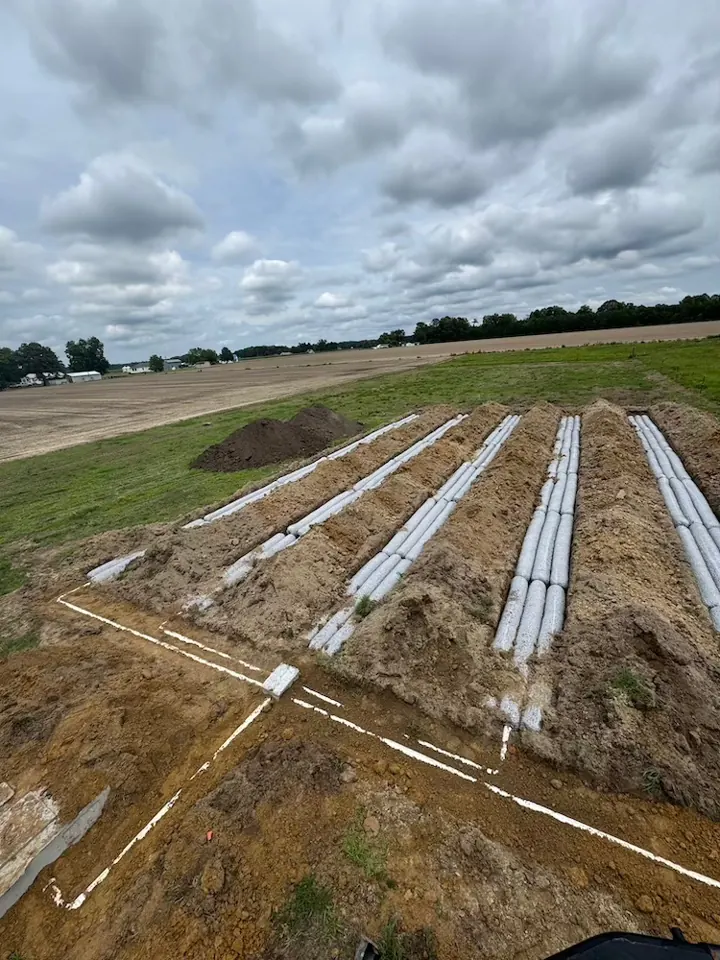
What does drain field installation involve in Augusta?
A drain field is a set of trenches that spreads tank effluent into the soil, where the soil finishes treating it. Installing one means a soil evaluation, a county permit, trenches cut to the depth and length on the permit, a distribution box to split the flow evenly, and an inspection before backfill.
New fields go in for new homes, and replacement fields go in when an old one stops taking water. In both cases the soil does most of the work, which is why Augusta's mix of sand, clay and wet stream terraces matters so much to how a field is built.
How do you know a drain field is failing?
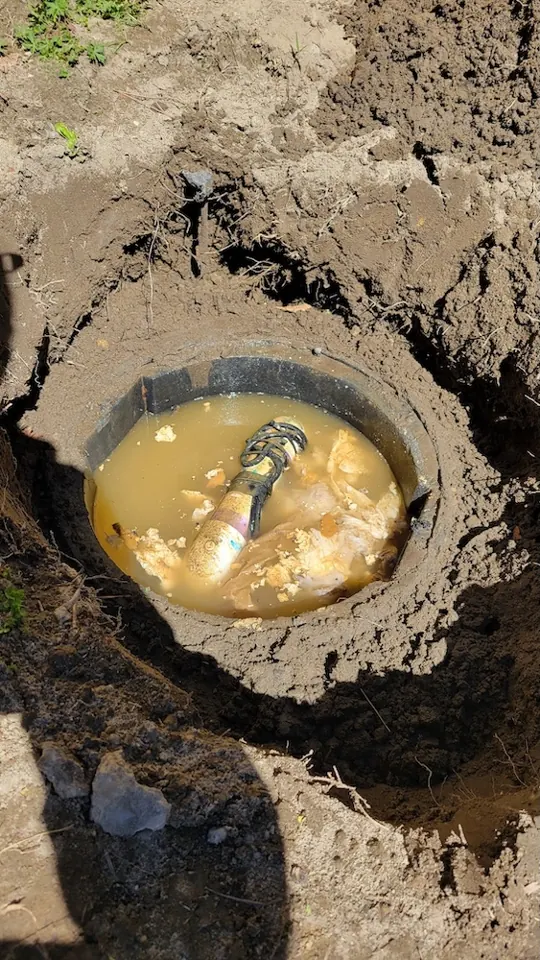
Soggy or spongy ground over the lines, sewage odor in the yard, bright green stripes that track the trenches, slow drains throughout the house, and backups that return soon after the tank is pumped.
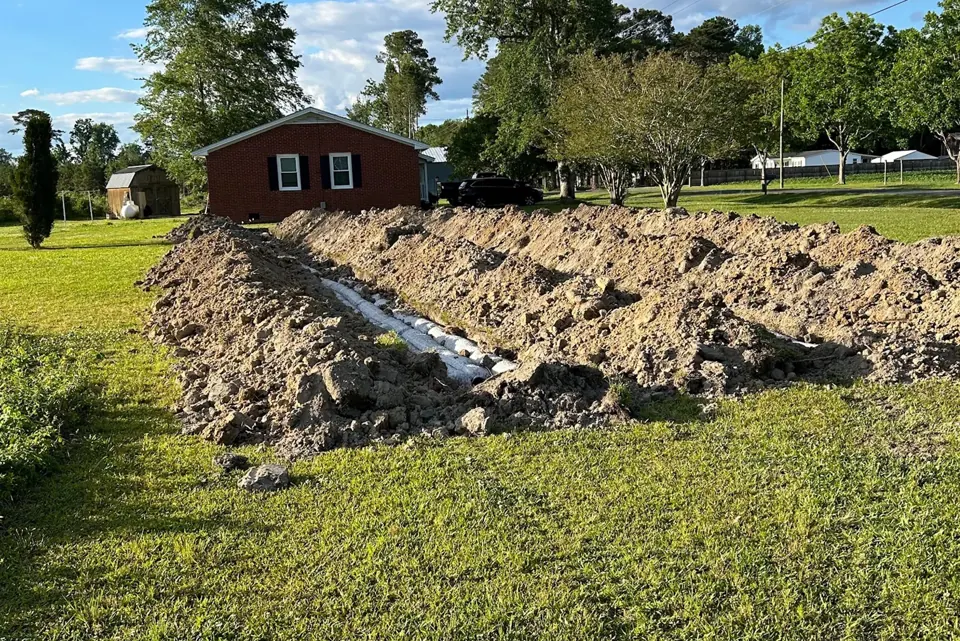
Timing is a clue. If the trouble shows up only in late winter and spring, the field may be meeting a seasonal water table. The USDA description of the Augusta soil series lists a seasonal high water table 12 to 24 inches deep from December through May on the stream terraces where that soil forms. A field laid too deep for that ground spends part of every year underwater.
What kinds of drain field trenches are used around Augusta?
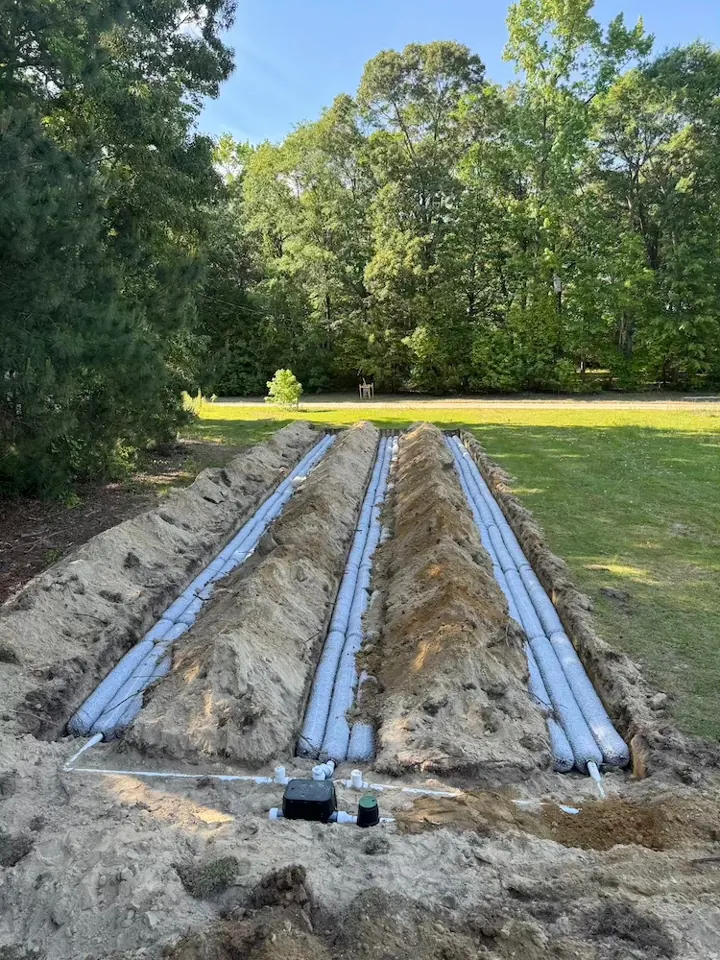
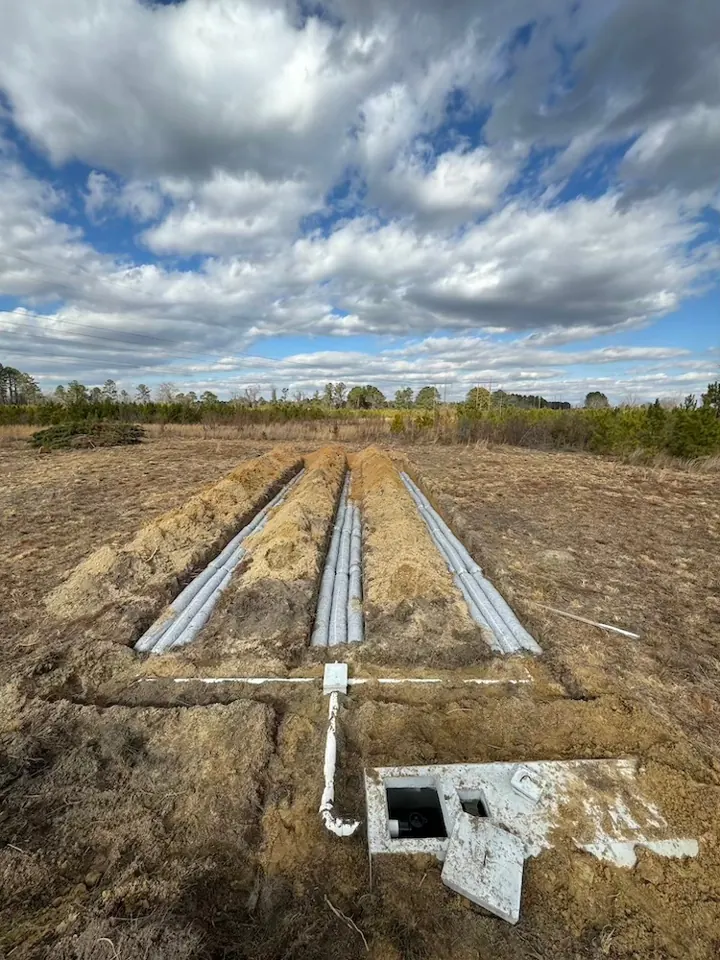
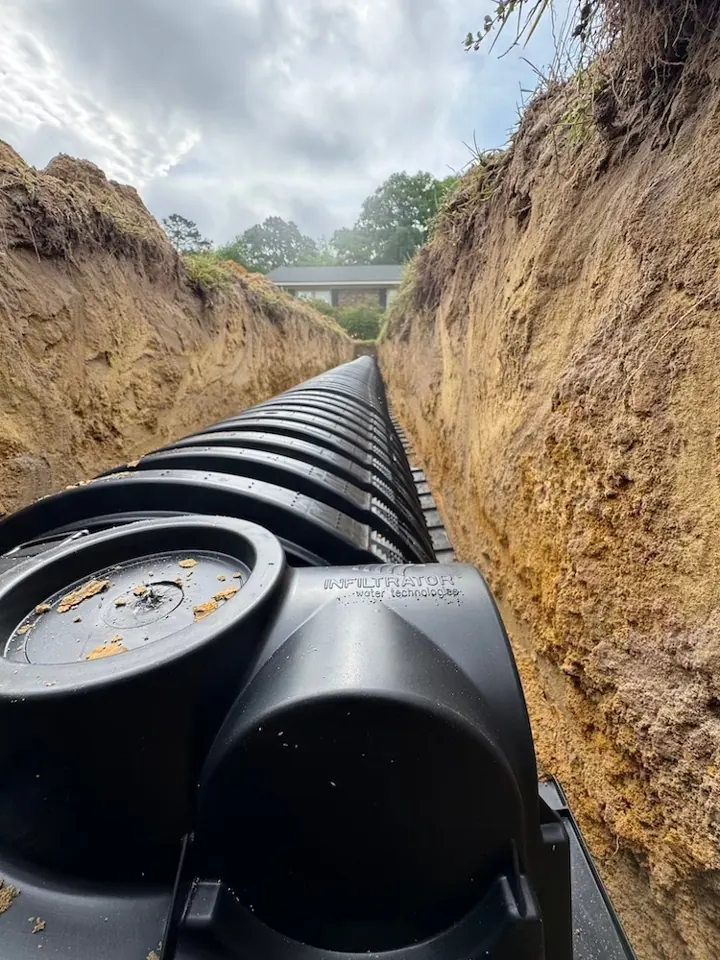
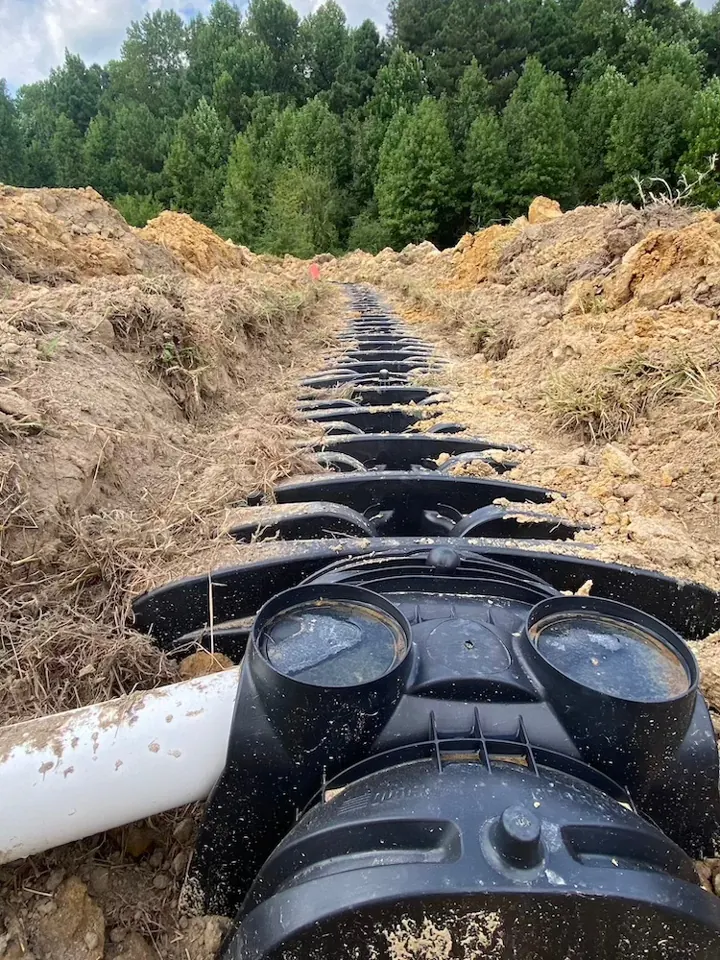
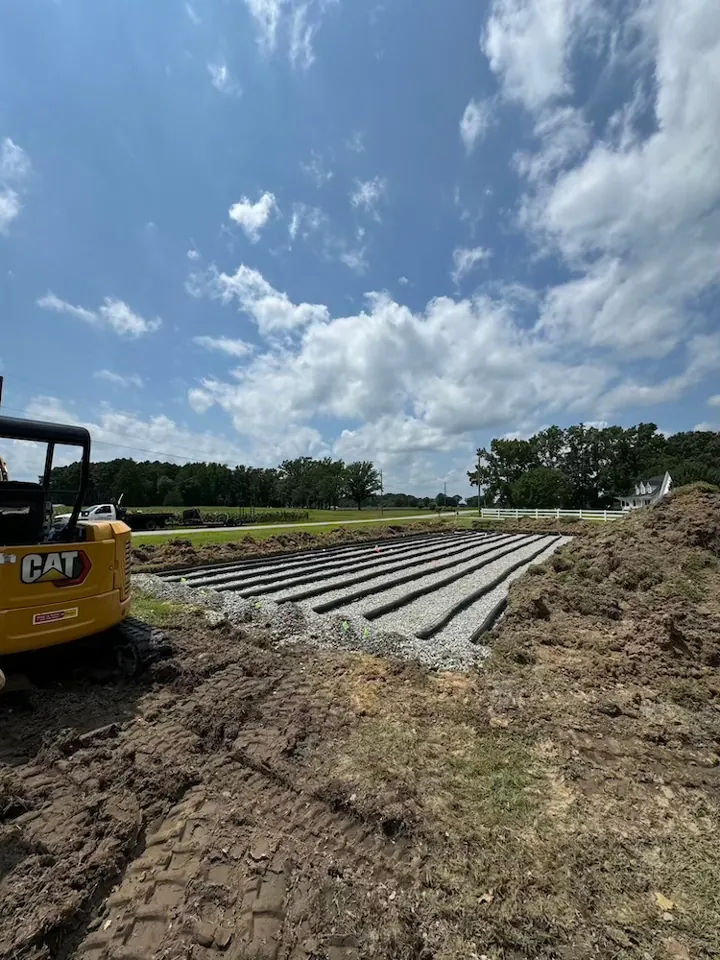
The common ones are plastic chambers, gravel with pipe, and bundled synthetic aggregate pipe. Each spreads effluent along the trench bottom; they differ in how they are installed and how much trench they need.
Chambers
Arched plastic units that leave an open space over the trench bottom. They are light enough to carry into tight yards and set without stone.
Gravel and pipe
Perforated pipe laid on and covered with washed stone. It needs a truck to bring stone to the trench.
Bundled pipe
Perforated pipe wrapped in a bundle of lightweight aggregate. It goes in quickly and needs no stone.
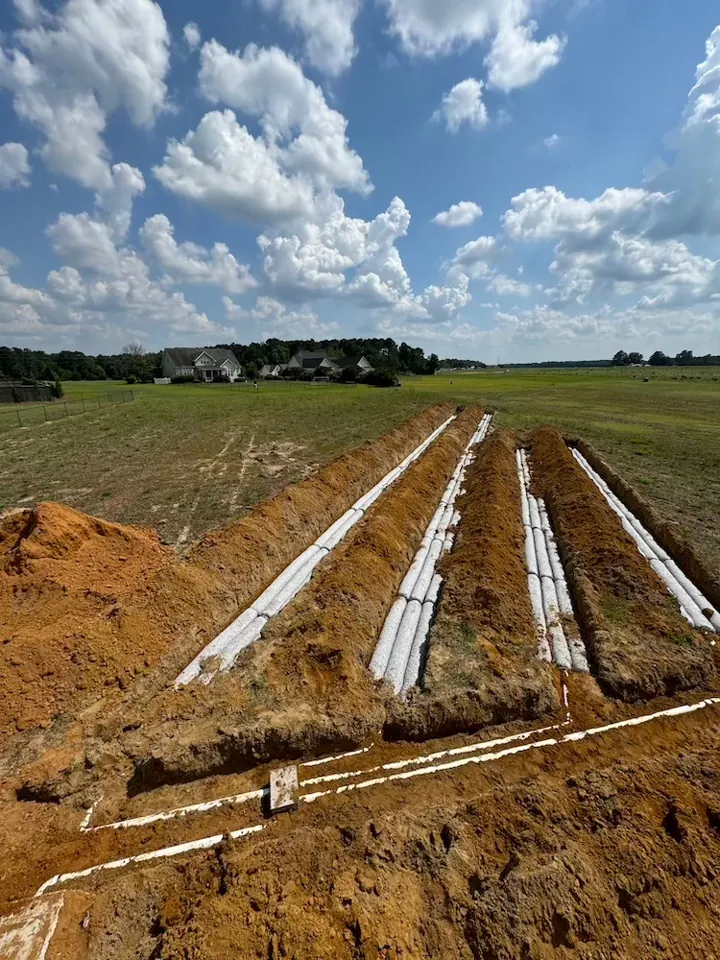
When soil is too wet or too shallow for any standard trench, the design may call for an alternative system such as a mound or an aerobic unit. Georgia's rules cover those in a separate section, and the county decides what a site can use.
How is a new field installed?
Lay it out from the permit, cut level trenches to the right depth, set the distribution box so it splits flow evenly, place the trench product, call the inspector, and only then cover it.
Stake the layout
Trench locations and lengths come from the permit. We stake them and check distances to wells, water lines and property lines.
Cut the trenches level
A trench bottom that runs downhill sends all the water to one end. We check grade as we dig.
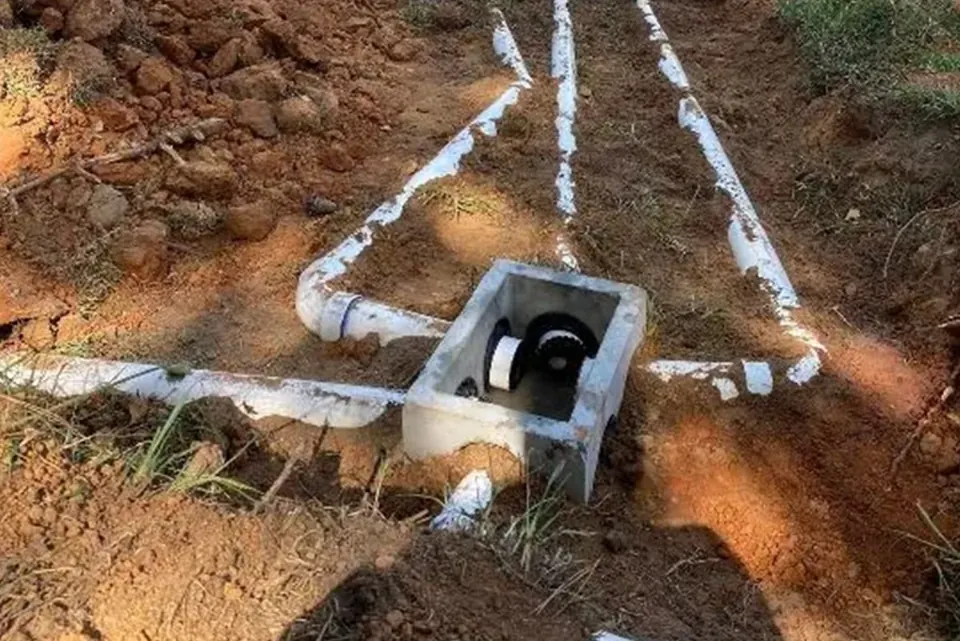
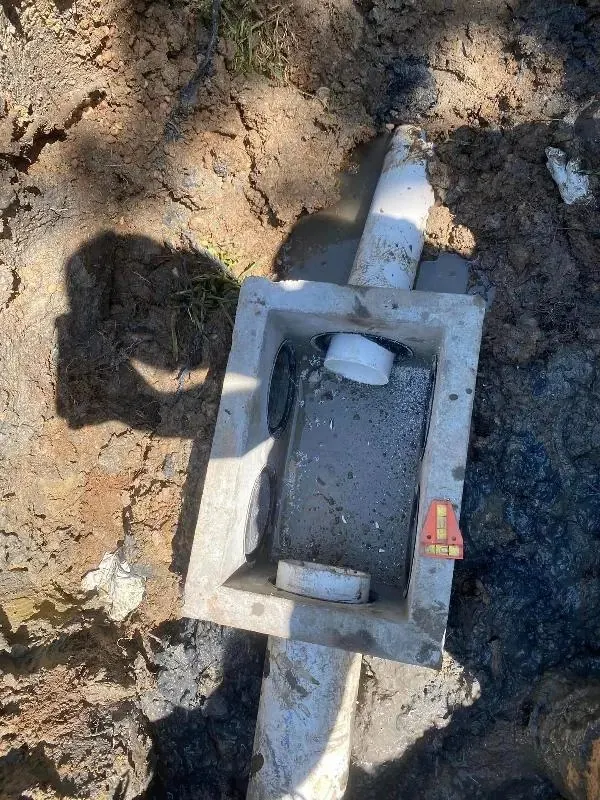
Set the distribution box
The box is leveled so each outlet gets its share.
Place chambers, stone or bundles
Product and length match the permit.
Inspection
Georgia's Rule 511-3-1-.03(4) bars backfilling until the final inspection.
Backfill and finish
Trenches are covered, crowned so rain sheds off, and seeded or strawed.
How far does a drain field have to be from a well?
At least 100 feet, under Georgia Rule 511-3-1-.07(3). The same rule sets 50 feet from the normal water level of ponds, lakes and streams, 10 feet from water supply lines and buildings with basements, and 5 feet from property lines and other buildings.
A replacement field also needs unused soil. If the old reserve area has a shed, pool or driveway on it now, finding a legal spot may take some creative layout. Try your options on the setback planner before you call.
The well rule covers existing or proposed wells, including a neighbor’s well near the line.
How do you keep a new drain field working in Augusta?
Keep traffic and water off it and keep solids out of it. Most early failures come from one of those three.
Route gutters, sump outlets and yard runoff away from the trenches, especially on clay lots where water already moves slowly. Do not park, drive, or let livestock stand on the field, and do not build sheds or pools on the reserve area. Have the tank pumped on a regular schedule so solids never reach the lines.