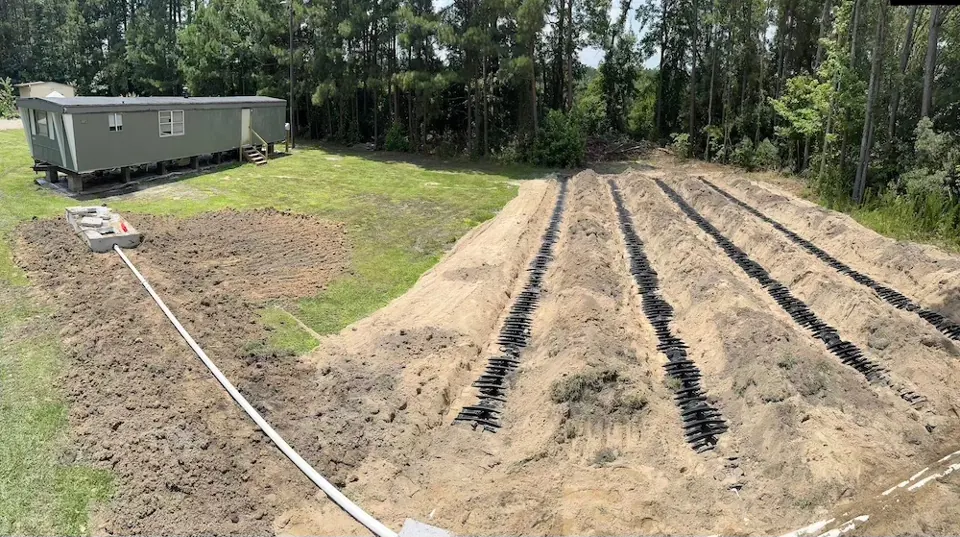
What does a mobile home need for septic in Augusta?
A mobile or manufactured home on its own lot needs the same thing a house does: a soil evaluation, a county construction permit, a tank sized to the bedroom count, a drain field sized to the soil, and an inspection before backfill. The difference is mostly in the planning around delivery and setup.
Plenty of Richmond County land holds a manufactured home on a few acres with a private system behind it. Getting the septic right before the home is delivered avoids the classic mistake: a new double-wide parked right on top of the best ground for a drain field.
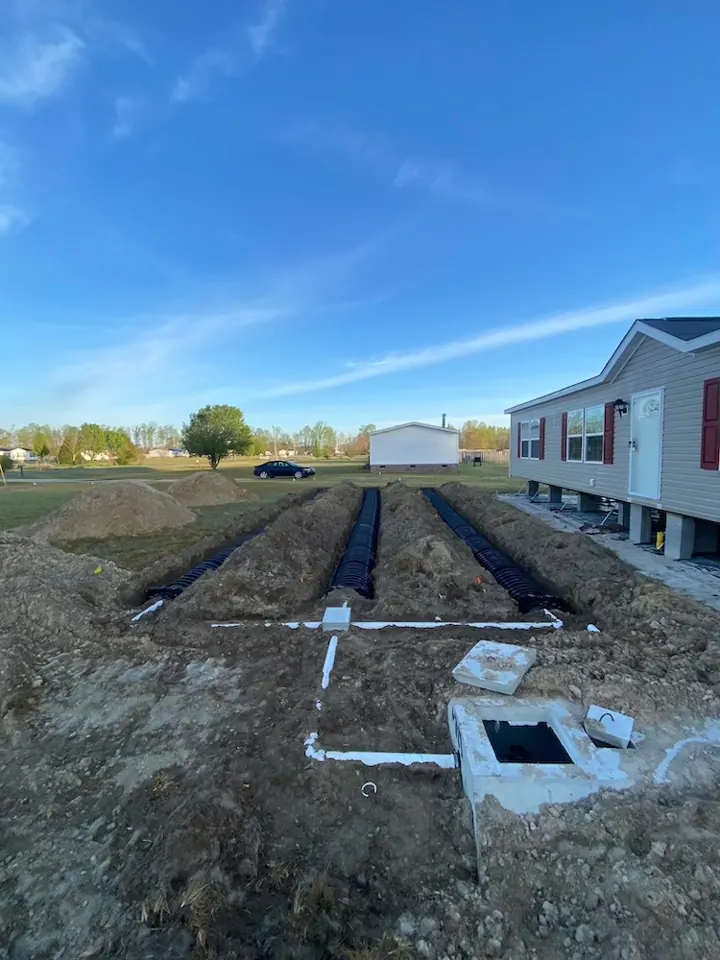
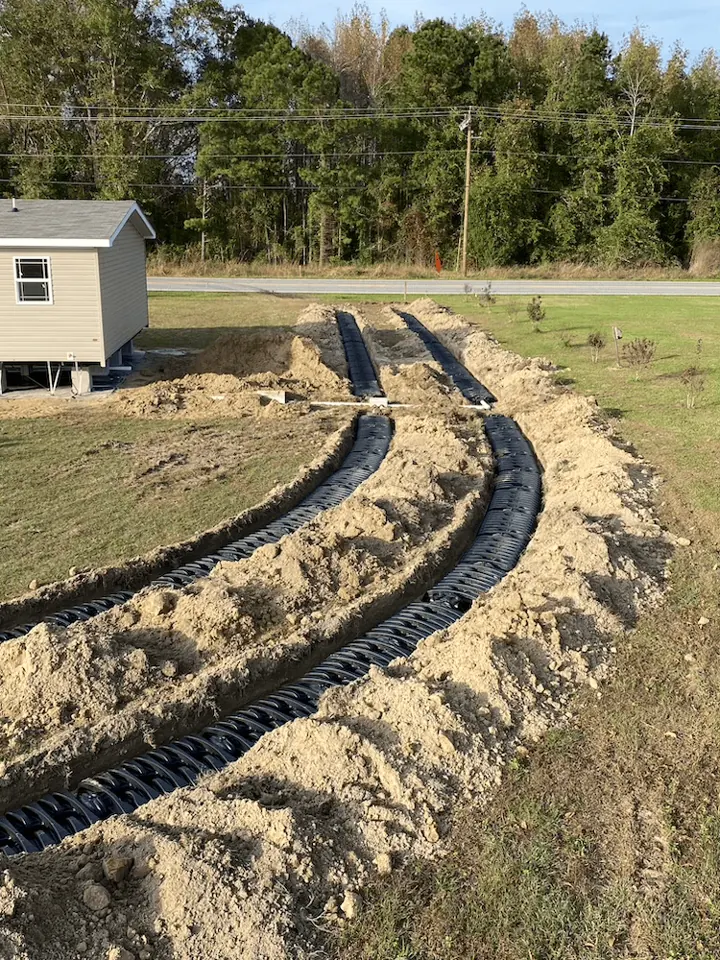
Should the septic go in before or after the home arrives?
Plan it before. The soil evaluation and permit should happen before you choose the setup spot, and the system can be installed before or after delivery as long as the field area stays clear of trucks.
Choose a field area first
We look for well drained ground away from the well, creeks and property lines, then fit the home around it.
Soil evaluation and permit
A Department-certified soil classifier evaluates the ground, and the county issues the permit under Rule 511-3-1-.03.
Mark the field
We flag the field and the reserve area so the delivery driver and setup crew keep their wheels off it.
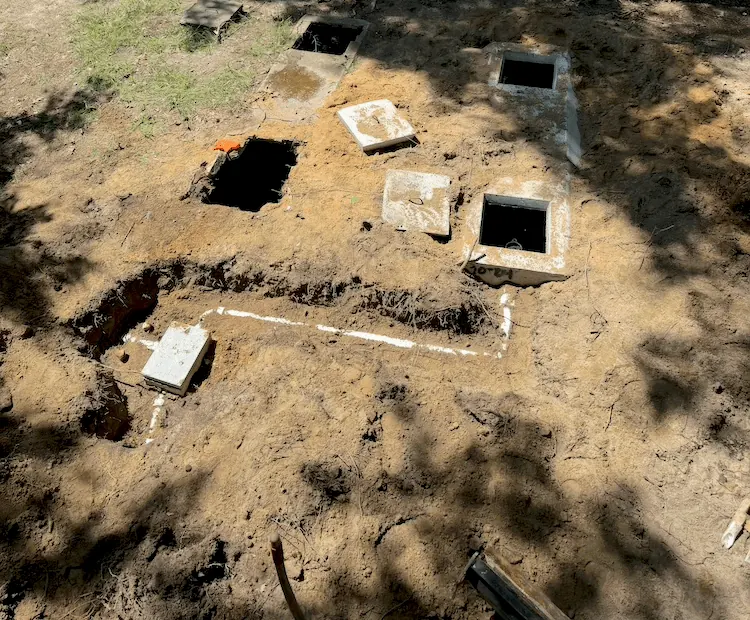
Set the tank and lines
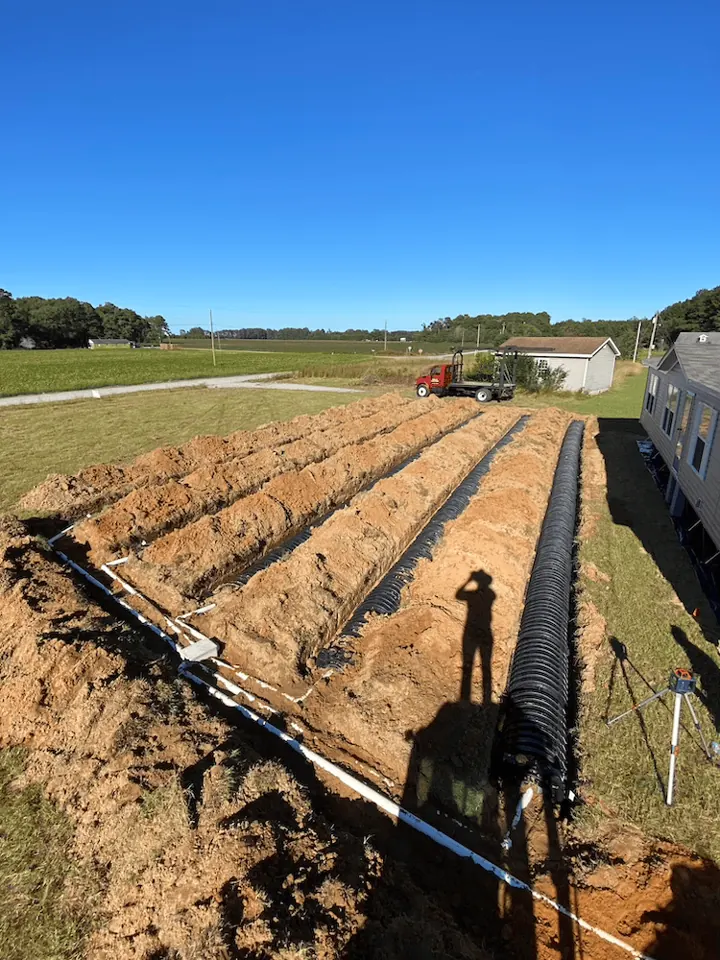
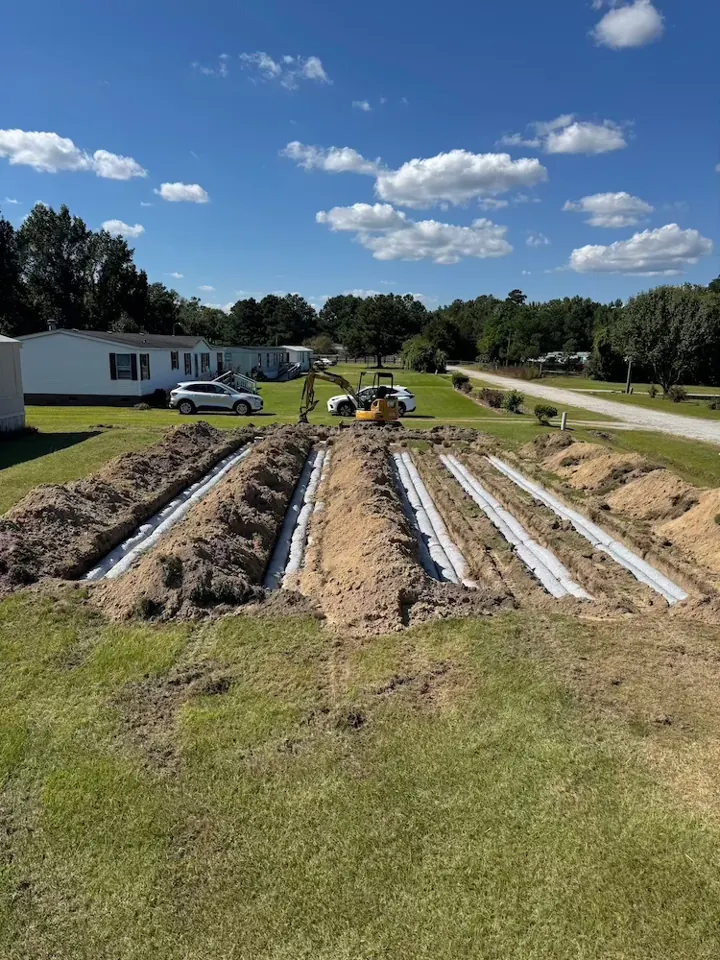
Tank, distribution box and field go in to the depths on the permit.
Inspection, then connect
The county inspects before backfill. The building sewer is connected once the home is set and leveled.
Heavy delivery trucks compact soil. A field area that was driven over during a wet week can lose much of its ability to take water.
How big a tank does a single-wide or double-wide need?
At least 1,000 gallons for one to four bedrooms under Georgia's Rule 511-3-1-.05(3). A fifth bedroom adds 250 gallons, and a garbage grinder adds 50 percent.
Field size is a separate question. It comes from the soil report and the bedroom count, not from the length of the home. A three bedroom single-wide on sandy ground can need a shorter field than the same home on tight clay or on a wet stream terrace.
The tank size calculator on the new construction page runs the numbers for any bedroom count.
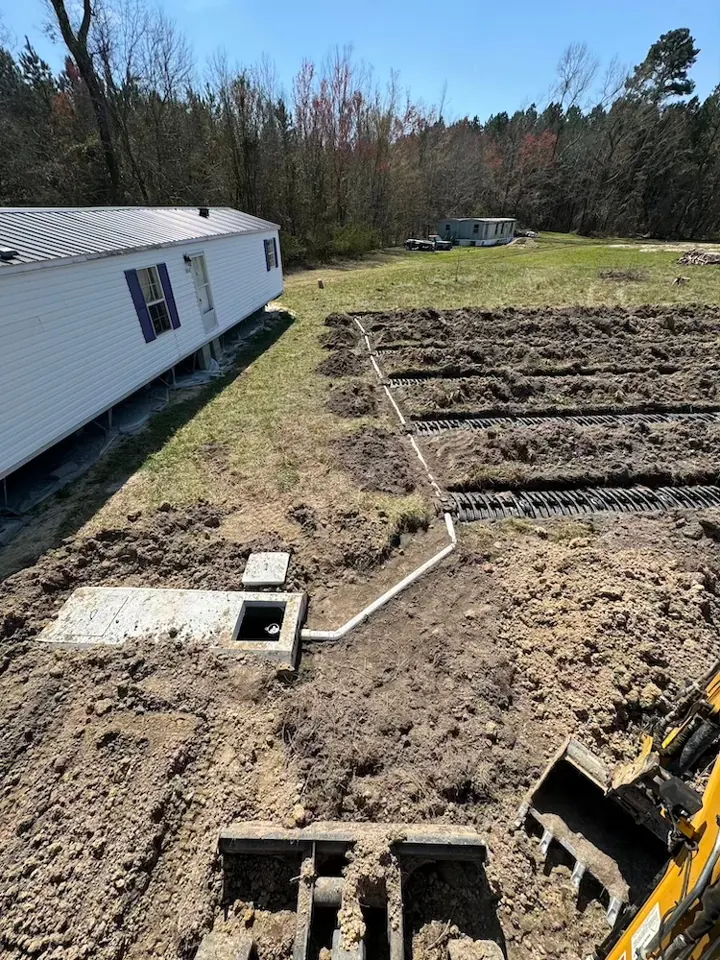
What kind of Augusta lots give mobile home septic trouble?
Low, flat lots near creeks and lots where the home has to sit downhill from the only good soil. Both are common enough on rural tracts that they deserve a look before you buy.
Low ground can hold water. The Augusta soil series, a stream terrace soil, carries a seasonal high water table 12 to 24 inches down from December through May. The USDA Sand Hills description also notes hillside seeps with water near the surface from November through April. Either can cut the depth available for a drain field.
Downhill setups are the other one. If the home's drain outlet sits below the field, gravity will not carry the flow, and a pump tank enters the plan. That adds cost and a power connection, so it is better to know early.
How close can the home sit to the tank and field?
Georgia's rules say a septic tank should be at least 10 feet from building foundations, and a drain field at least 5 feet from a building without a basement. Wells need far more room: 50 feet to the tank and 100 feet to the field.
Those distances come from Rules 511-3-1-.05(2) and .07(3). Remember that porches, decks and steps get added after setup. Leave room for them when you place the tank, and check every distance on the setback planner before the home is delivered.
What should the setup crew know about the septic system?
Where the tank inlet is, where the field and reserve area are, and which way the home's drain outlet should face. A five minute conversation before delivery saves a lot of rework.
The building sewer has to run downhill from the home's drain to the tank inlet. If the home is set with its outlet on the far side from the tank, the line gets long and may need extra fall the site cannot give. We mark the tank location and the outlet side on the ground so the driver can spot the home correctly.
Ask the crew to keep wheels and outriggers off the flagged field area, and to stack skirting, blocks and debris somewhere else. Once the home is leveled, we make the final connection and confirm the line drains cleanly to the tank.