Our story: established in Augusta in 2021
Why the company started here in 2021, what we kept seeing on local jobs, and how the work is run today.
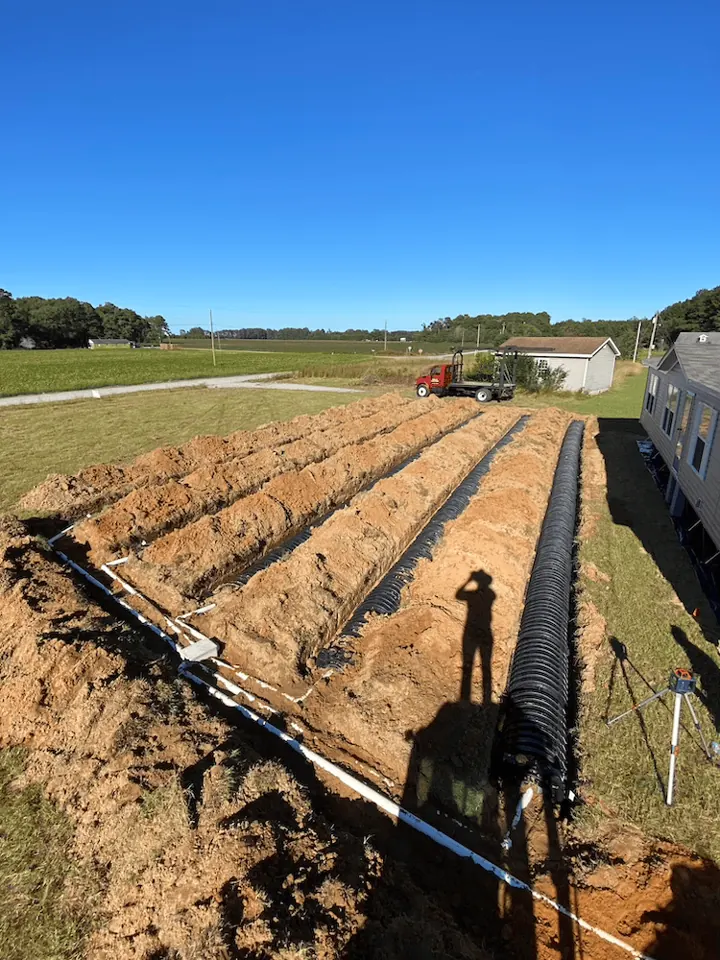
Why did a septic company start in Augusta in 2021?
Atlas Augusta Septic Installation began in 2021 after a run of service calls that all ended in the same back yard problem. The calls came in for slow drains, gurgling toilets and a smell in the laundry room, in homes outside the reach of the sewer lines. Clear the pipe, and too often the real trouble was further out: a tank no one had opened in years, or a drain field that had quietly stopped taking water.
Clearing the line bought those homeowners a few weeks. What they needed was a system rebuilt properly, by someone who would start with the ground instead of the backhoe. That gap is why the company exists. It was set up as an Augusta business, run from 407 6th St downtown, to install and replace septic systems across Richmond County and into Columbia County.
What did we keep seeing on local septic jobs?
The same handful of shortcuts, over and over:
- Tanks set on loose fill that had settled and tipped toward the house.
- Field lines dug downhill, so the first trench flooded while the last one stayed dry.
- Fields laid through the one low corner of the lot that holds water every spring.
- Estimates written as a single number, with no way to tell what was included.
None of that is required by Georgia's rules. The rules point the other way: a county permit only after the soil, absorption and groundwater check out, and no backfill until the final inspection is done. The problem was not the standard. It was how the work got ordered and how rushed it was.
How did the soil-first approach take shape?
From the ground itself. Augusta has a soil series named after it, and it is a wet one. The Augusta series is a somewhat poorly drained stream terrace soil with a seasonal high water table 12 to 24 inches down from December through May. On sloping sandy ground, the USDA ecological site description for the Sand Hills describes hillside seeps that keep water within a foot of the surface from November through April.
A field built for dry August ground in either setting spends its springs underwater. So the order of work became fixed early on: soil report first, then the layout of tank and field, then the house pad or the delivery spot, then the permit, the installation and the inspection. We will not price a system before we have seen the soil report, because the report is what decides the system.
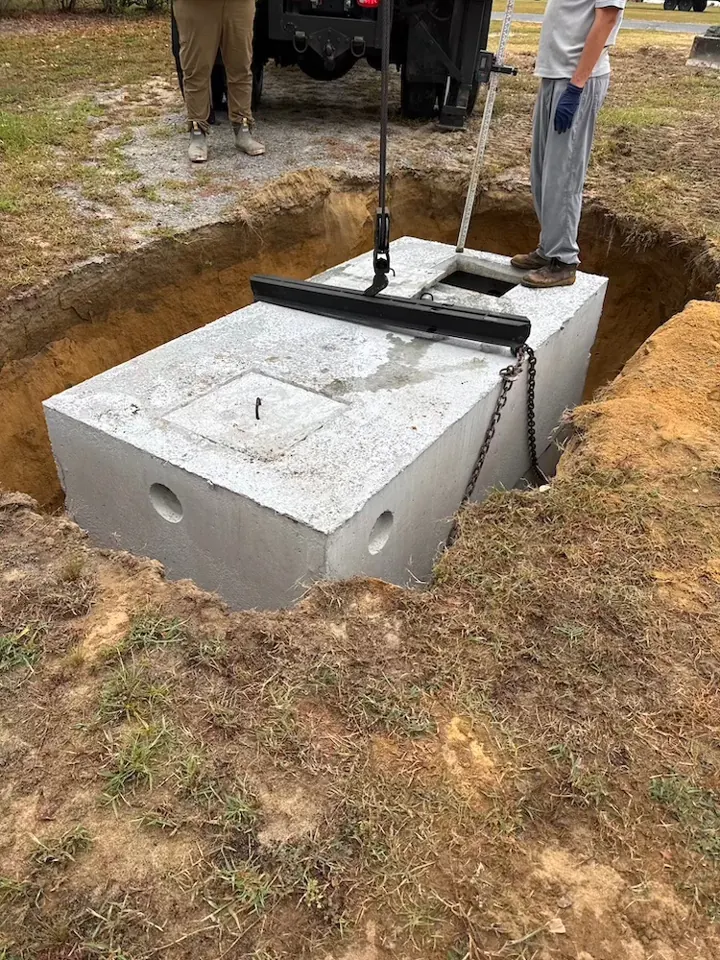
How is the company run day to day?
Small on purpose. The person who walks your lot is the person responsible for how the job turns out, and the phone is answered around the clock. Site visits are by appointment, and most of the work happens on your property rather than at the office.
Every estimate is a free itemized estimate: tank, field, distribution box, any pump tank and panel, earthwork, restoration, and the county steps, each on its own line. Trenches stay open until the county inspector has seen them. Disturbed ground gets crowned, seeded or strawed before we leave.
What do we stand for?
Doing the parts of a septic job you will never see as carefully as the parts you will. A tank bedded so it does not settle. Lines that run level. A field placed where the soil can actually treat what reaches it. Straight answers about what the county will ask for, before you buy a lot or set a house.
See the jobs we take on the home page, check a spot with the setback planner, or ask for a free itemized estimate.