What does septic work look like in an established Martinez neighborhood?
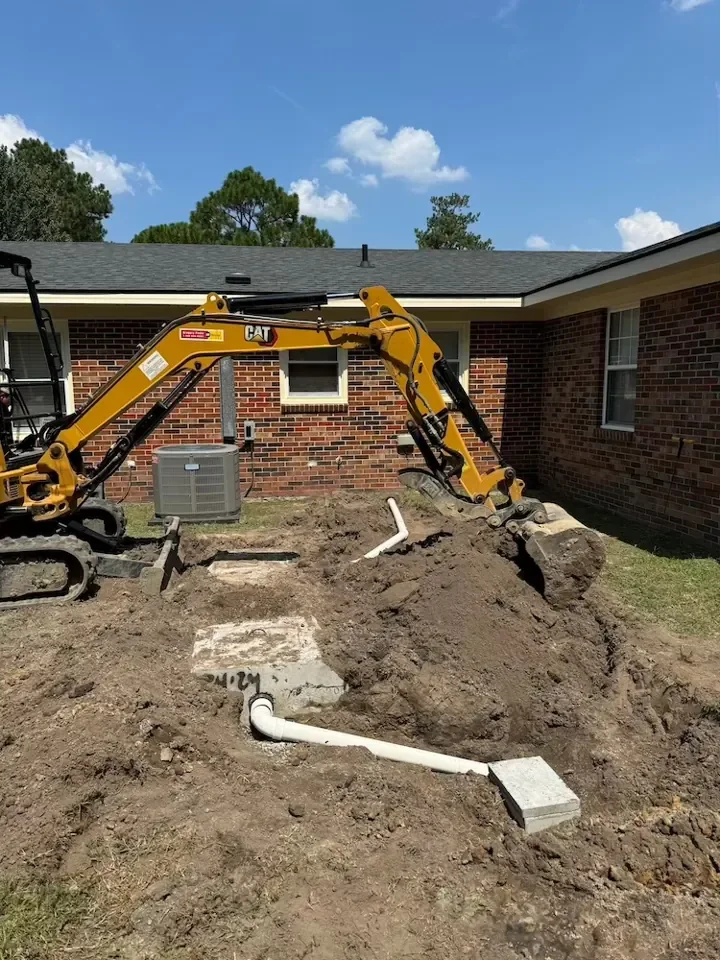
Mostly replacement and repair. Martinez is a settled suburb with streets that filled in decades ago, so septic tank installation in Martinez, GA usually means swapping a failed tank or field on a home that never got a sewer tap, in a yard that already has trees, fences and a driveway in the way.
Martinez has been counted as its own community since the 1980 census, a decade before Evans showed up on the census list. Its population slipped from 35,795 in 2010 to 34,535 in 2020 (Wikipedia, citing the census), while Evans next door kept climbing. That is what a built-out place looks like: few new lots, lots of aging infrastructure, and a county plan that calls for a Martinez redevelopment plan and tax allocation district rather than new subdivisions.
A system that has worked for thirty years does not owe anyone a warning before it quits. The job is to read what is left, decide whether to repair, replace or connect, and build the new part right.
How can you tell a Martinez septic system is failing?
Slow drains across the whole house, gurgling when the washer empties, a sewage smell in the yard, or soggy, extra-green grass over the field lines. Any one of those after a pump-out is a strong sign the field or the tank has failed.
- Backups in the lowest fixture first. A basement shower or a first-floor tub filling from the drain points at the tank or the line out to the field.
- Wet ground that never dries. Effluent surfacing over the trenches means the soil has stopped taking water.
- A tank that fills fast after pumping. Water running back in from the field is a field problem, not a pumping problem.
- Settling or cracks around the lid. An old concrete or steel tank can collapse, which is a safety problem as well as a plumbing one.
Our septic tank replacement page walks through each failure in more detail, and the drain field installation page covers rebuilding the field alone.
Repair, replace or connect to sewer: which fits a Martinez home?
Connect if sewer is on your street and the tap makes sense. Repair if one part failed and the rest is sound. Replace when the tank and field are both done.
| Option | When it fits | Who to call first |
|---|---|---|
| Connect to county sewer | A main runs past the lot and a tap is offered | Columbia County Water Utility, 706-863-6928 |
| Repair one part | A broken line, a failed distribution box, a cracked lid or baffle | Us, then the Health Department if the repair needs a permit |
| Replace the field | Tank is sound but the trenches no longer take water | Soil classifier and the Health Department |
| Replace tank and field | Both have reached the end of their life | Soil classifier and the Health Department |
The county's Columbia County water and sewer FAQ says its water utility is constantly expanding and routes extension questions to Engineering at 706-651-0433. That call costs nothing and can save you from building a new field a year before a main arrives.
How do you fit a new field into a yard with old trees and a fence?
By measuring first. A replacement field still has to clear Georgia's minimums: 5 feet from the property line and the house, 10 feet from a building with a basement, 10 feet from a water line, and 100 feet from any well. A tank keeps 10 feet from the property line and the foundation.
Older Martinez lots were laid out when nobody planned around a second field, so the open ground that is left can be tight. Here is how we work it:
- Locate the old tank, line and trenches before anything else, so the new layout does not cut through them blindly.
- Keep new trenches away from the drip line of mature trees. Roots that find a field line will fill it.
- Check for an old well. An existing well on your lot or a neighbor's counts toward the 50 and 100 foot distances.
- Run the numbers in the setback planner before the soil classifier comes out.
What can the soil under an older Martinez yard hide?
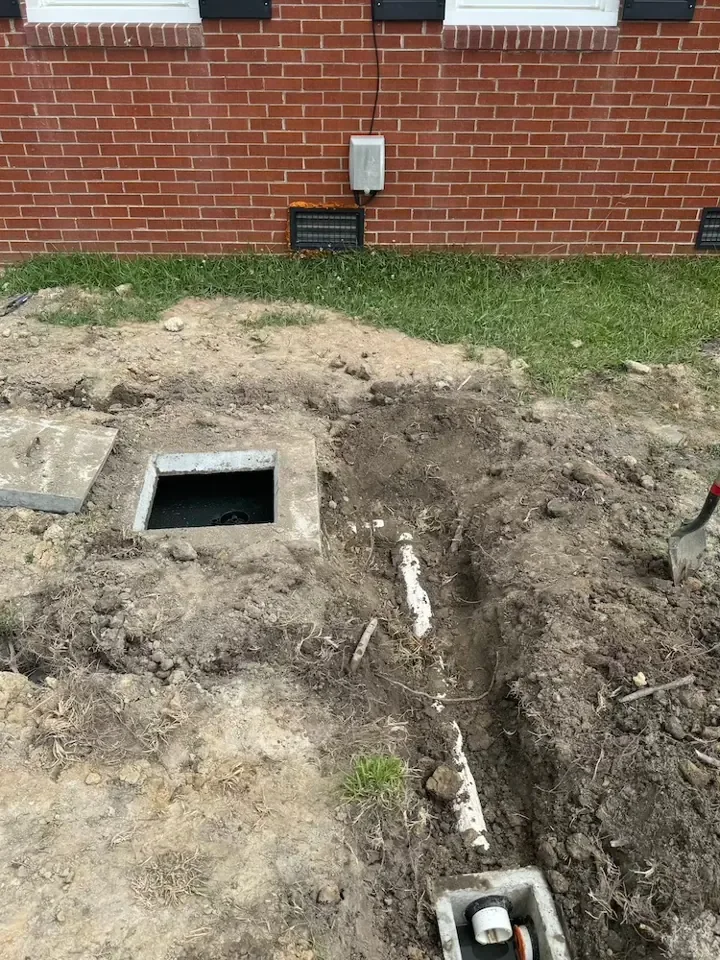
Wet spots and tight clay. The soil evaluation finds them; what you see on the surface does not.
In the Piedmont soils of the region, the USDA describes series like Cecil as well drained over a firm red clay subsoil, which takes water steadily but slowly. It also describes poorly drained soils such as the Worsham series, found in depressions, at the heads of drains and at the base of slopes, with a seasonal high water table within 12 inches of the surface. A yard can hold both. The old field may have been laid in the wrong one.
Georgia requires that evaluation to be done by a Department-certified soil classifier under Rule 511-3-1-.03(7). See perc test and soil evaluation for what the classifier looks for.
How does a Martinez septic replacement run, start to finish?
Find and open the old system
We locate the tank and the field, pump if needed, and look at what failed.
Check for sewer
One call to the county tells you whether connecting is an option.
Soil evaluation and permit
A certified classifier evaluates the new field area, and the Columbia County Health Department issues the permit. Rule 511-3-1-.03(2) requires it before installation.
Build the new system
New tank, distribution box and trenches to the depths on the permit, with the old tank abandoned the way the county asks.
Sign-off, then cover
Trenches stay open for the county inspector. Once it passes we backfill, crown and seed the yard.
Septic permits for Martinez: Columbia County
Columbia County Health Department
Phone: 706-868-3330, the number the county's own permit packets give for septic tank and well permits.
Source: Columbia County permit packet.
Which neighbors share Martinez crews and permits?
Evans to the north and northwest shares the same Columbia County office; Augusta, across the line to the southeast, does not.
That county line runs right along the edge of Martinez, so two homes a short drive apart can need two different permit offices. Interstate 20 forms the short southern boundary of Martinez, with exits at South Belair Road and Wheeler Road. On the Evans side, our work leans toward newer homesites at the edge of the sewer. Head toward Grovetown and the first question is whether the lot is inside the city, where sewer is the rule. Cross into Augusta and the Richmond County environmental health office takes over the permit, the same office that handles Hephzibah and Blythe.
A bit of local history: the community traces to El Cordero Ranch, land a Cuban immigrant named Jose Antonio Martinez y Zaldivar bought in 1869; the old hacienda still stands off Old Ferry Road.