Septic tank installation in Augusta, GA
Septic tank installation for Augusta and Richmond County homes, plus new drain fields, pump tanks and full replacements, all built to Georgia's rules and inspected before a shovel of dirt goes back in.
Every job starts with a site visit and a free itemized estimate.
- Established 2021
- Open 24/7
- Georgia jobs only
What septic work do we install around Augusta?
We install complete septic systems: the tank, the distribution box and lines, the drain field, and a pump tank when the ground calls for one. We also replace failed tanks and fields on homes that already have septic. Tap a job below for the details, the rules and the photos.
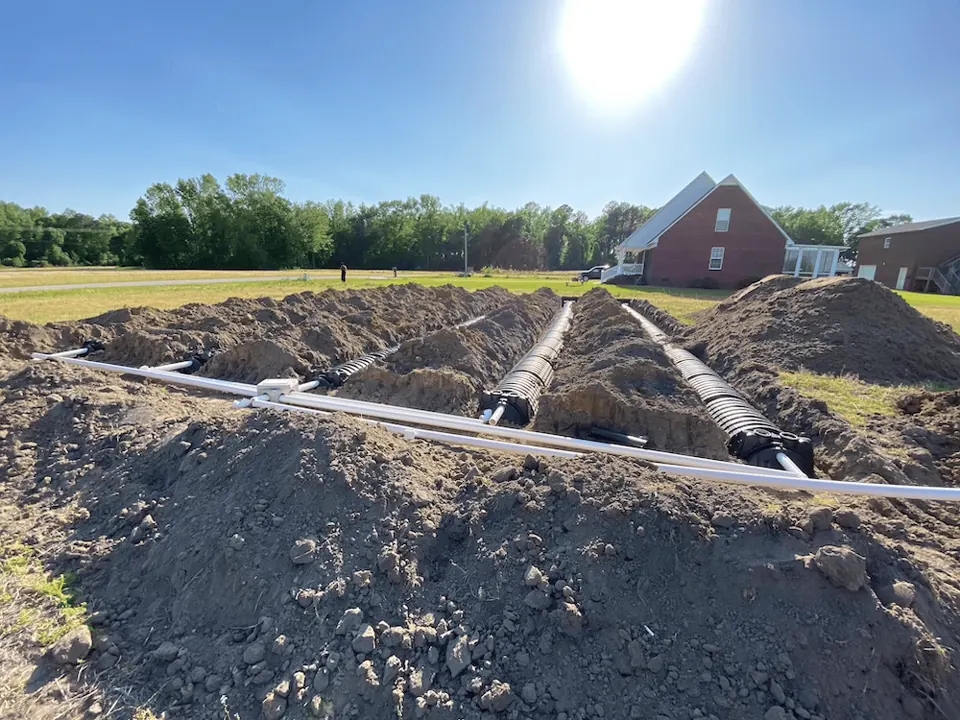
 New construction septicTank and field for a house that has never had one.
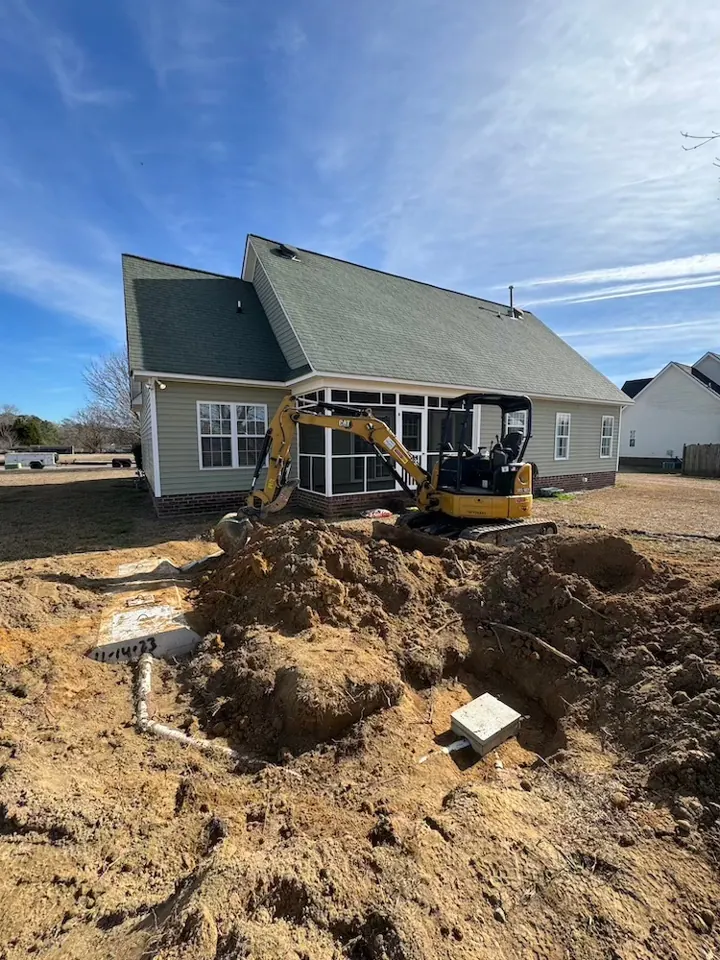
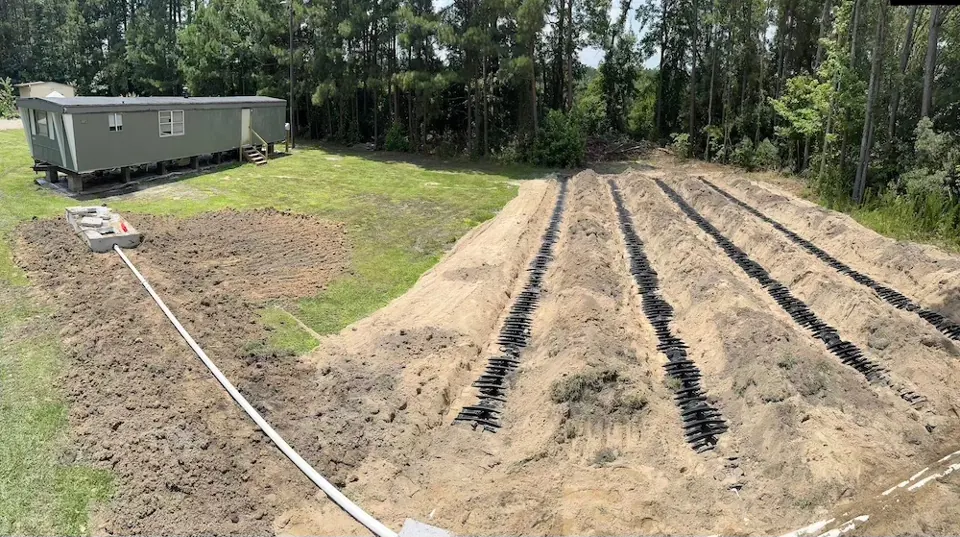 Mobile home septicSystems sized for single-wide and double-wide homes.
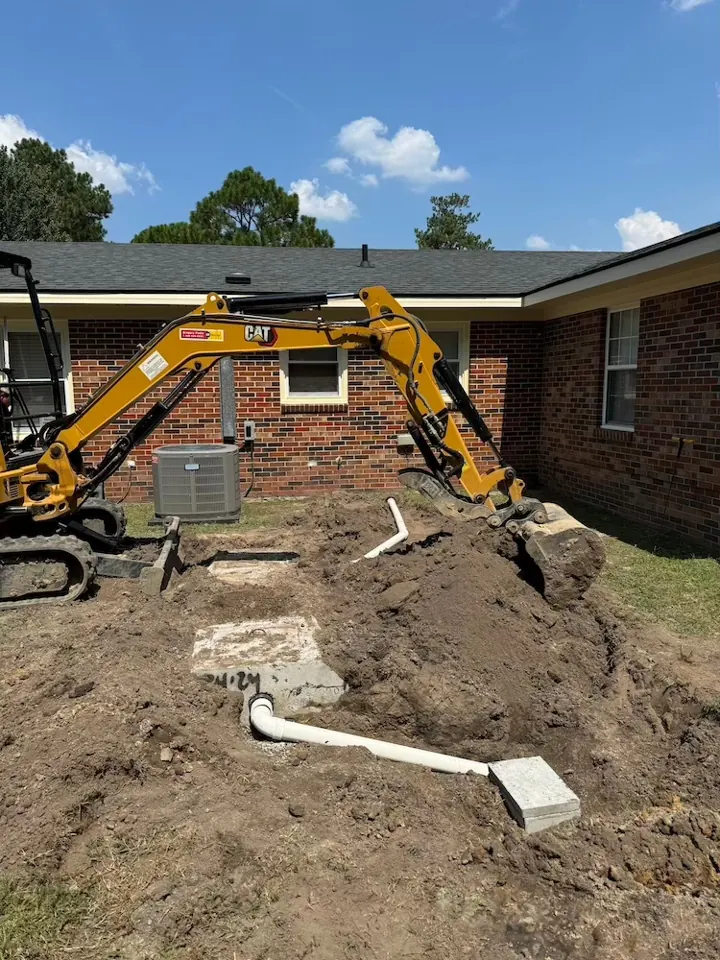 Septic tank replacementSwap a failed or cracked tank, keep the yard livable.
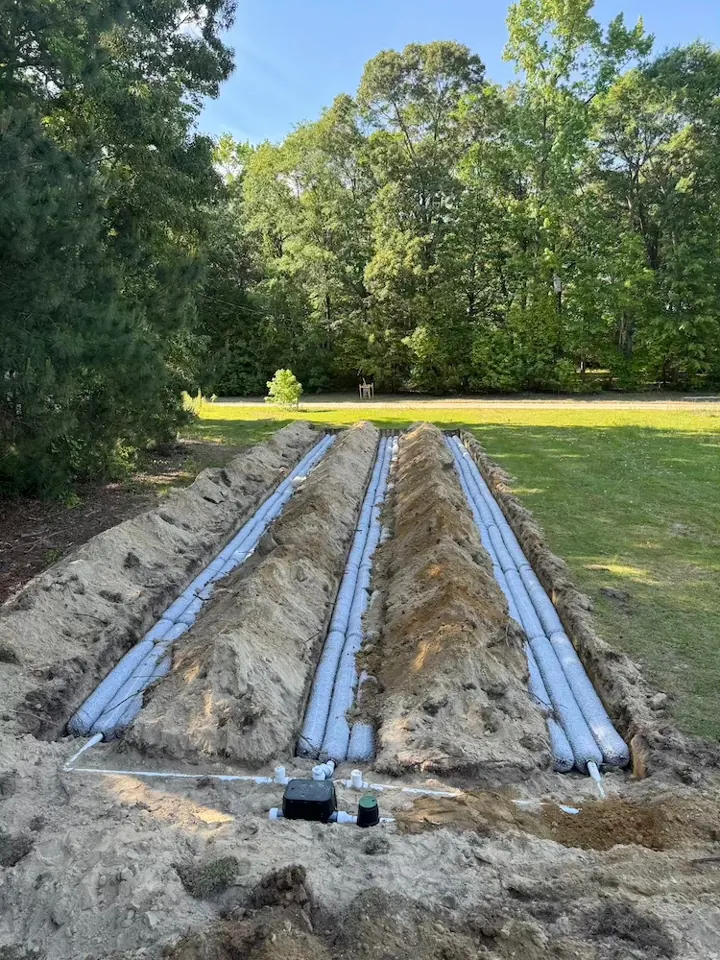 Drain field installationNew lines when the old field is soggy or dead.
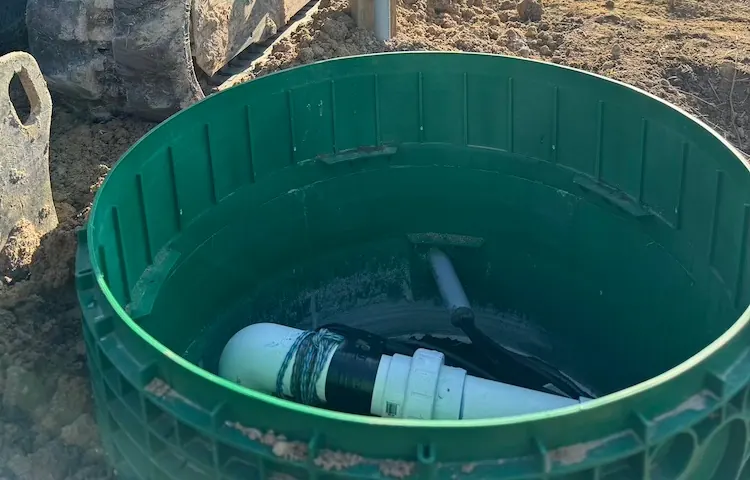 Pump tank installationPump tank, floats and alarm when gravity will not work.
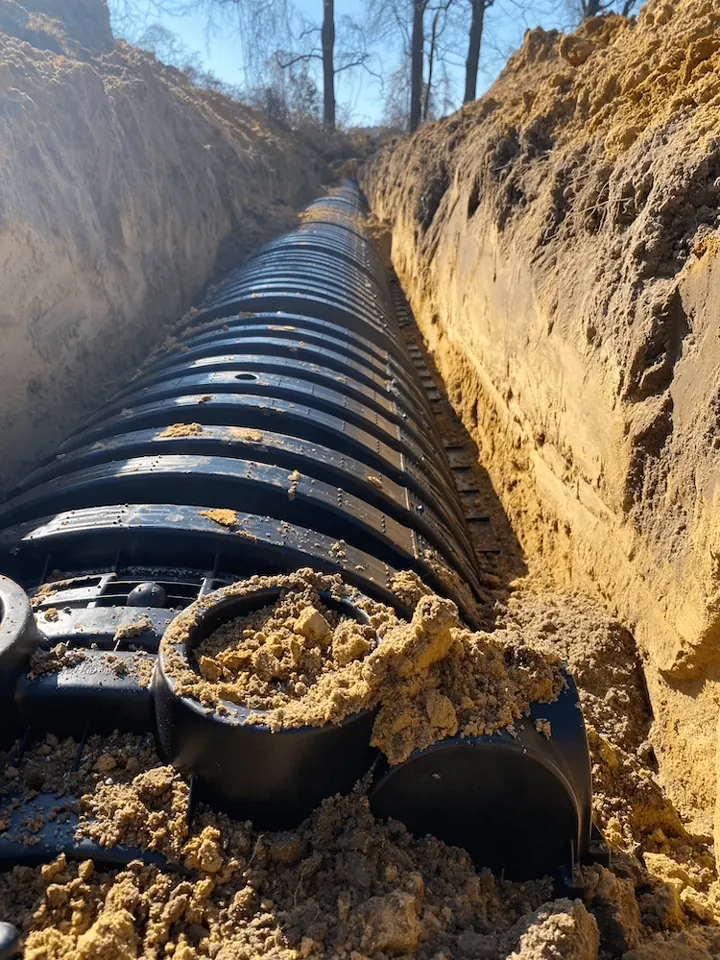 Perc test and soil evaluationKnow what the ground will take before you buy or build.
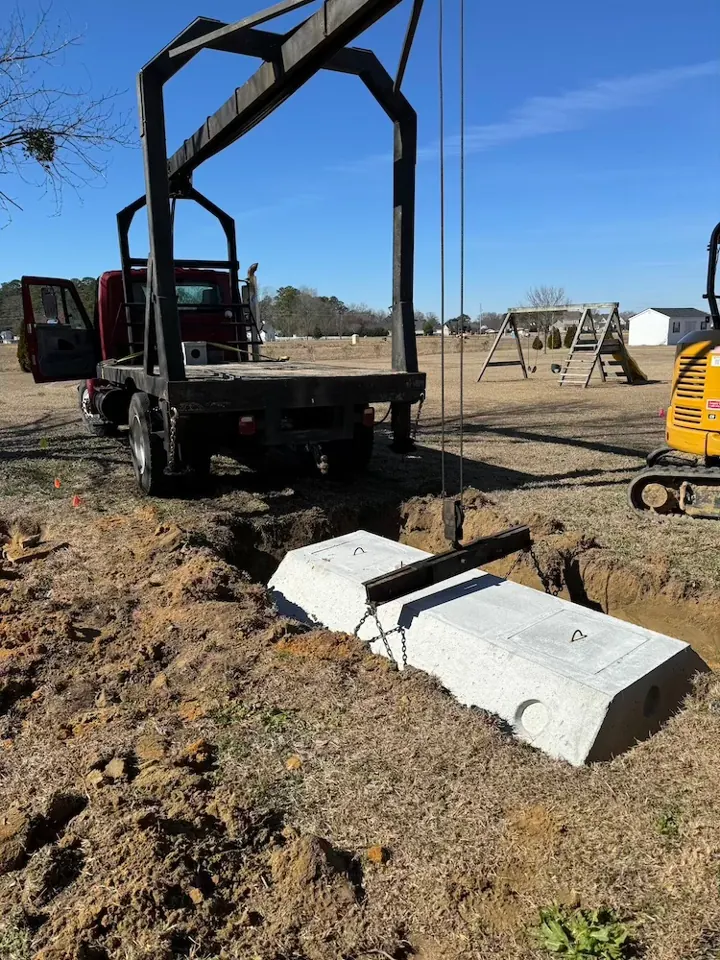 Installation cost factorsThe factors that move the number, line by line.
 Columbia County septicEvans, Grovetown, Martinez, Appling and Harlem.
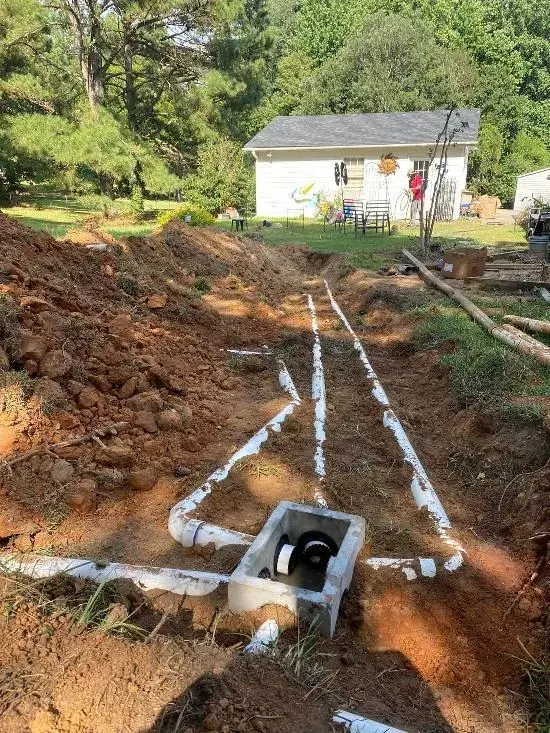
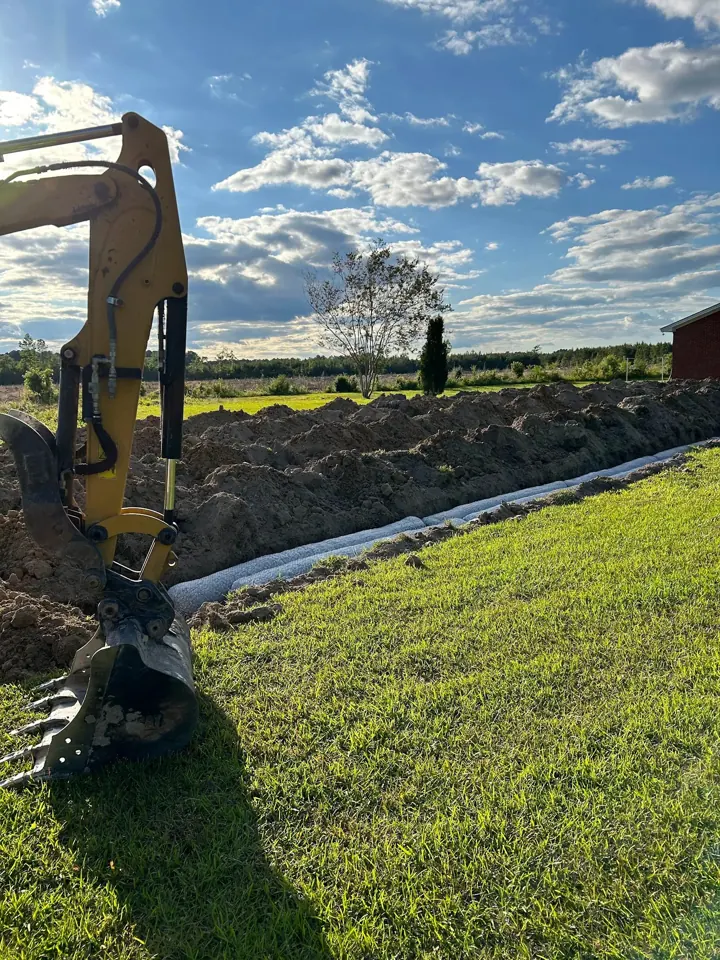
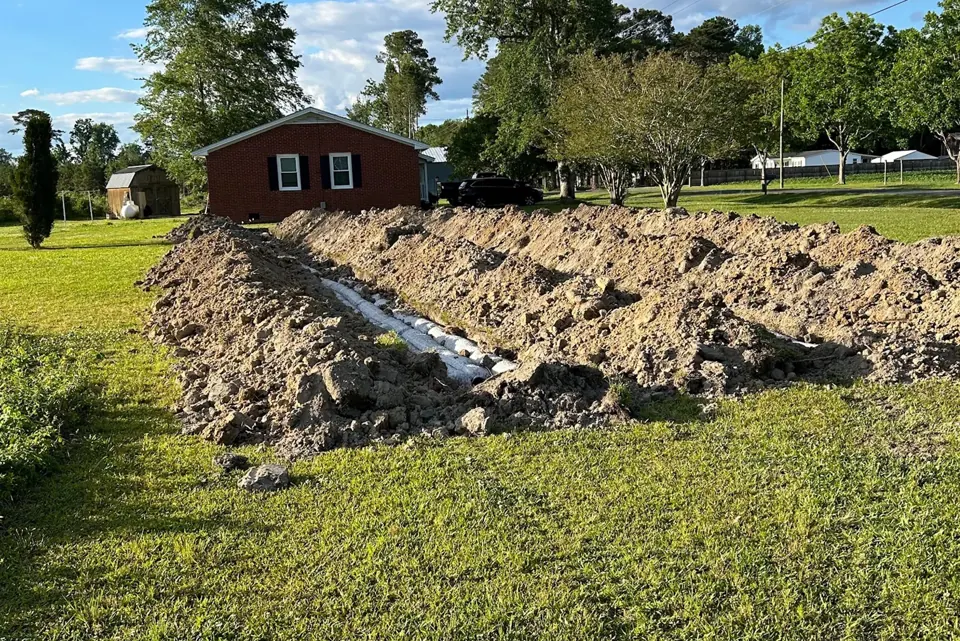
What do our septic jobs around Augusta look like?
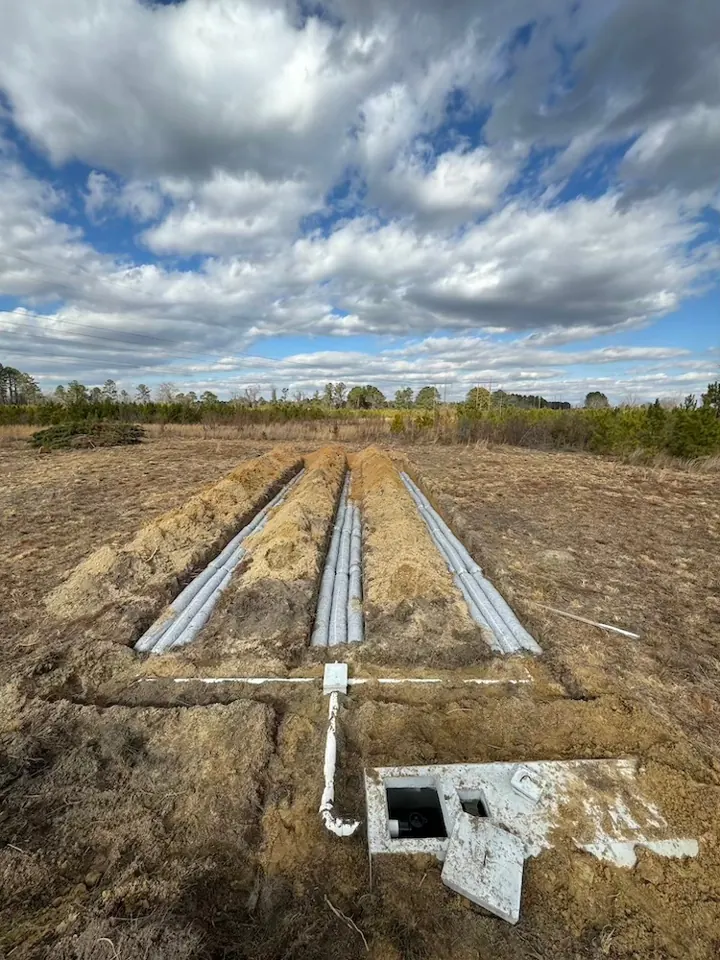
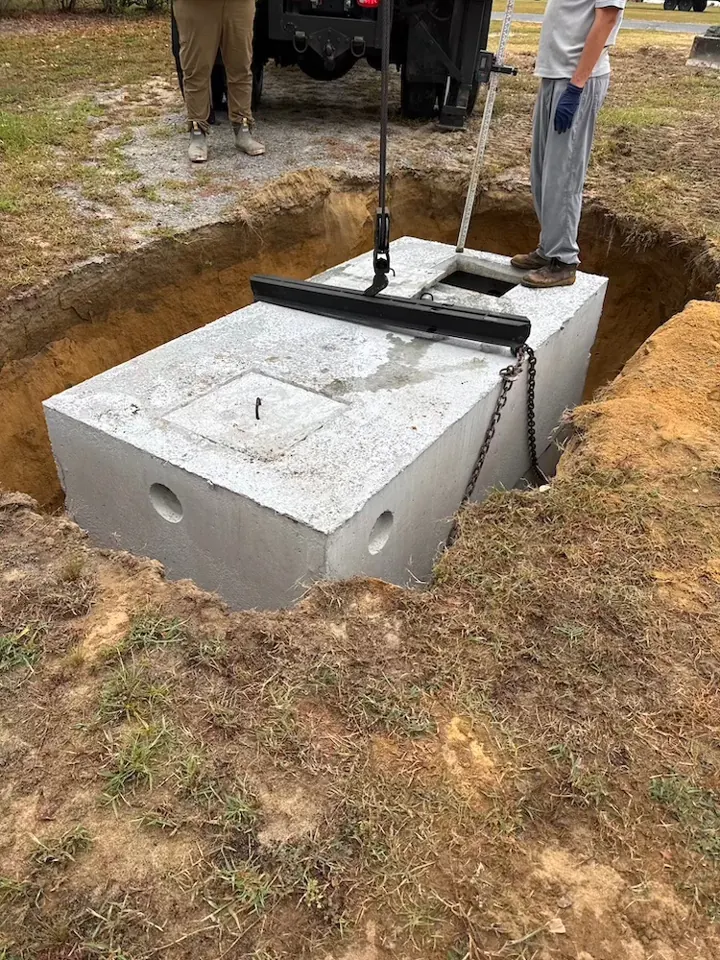
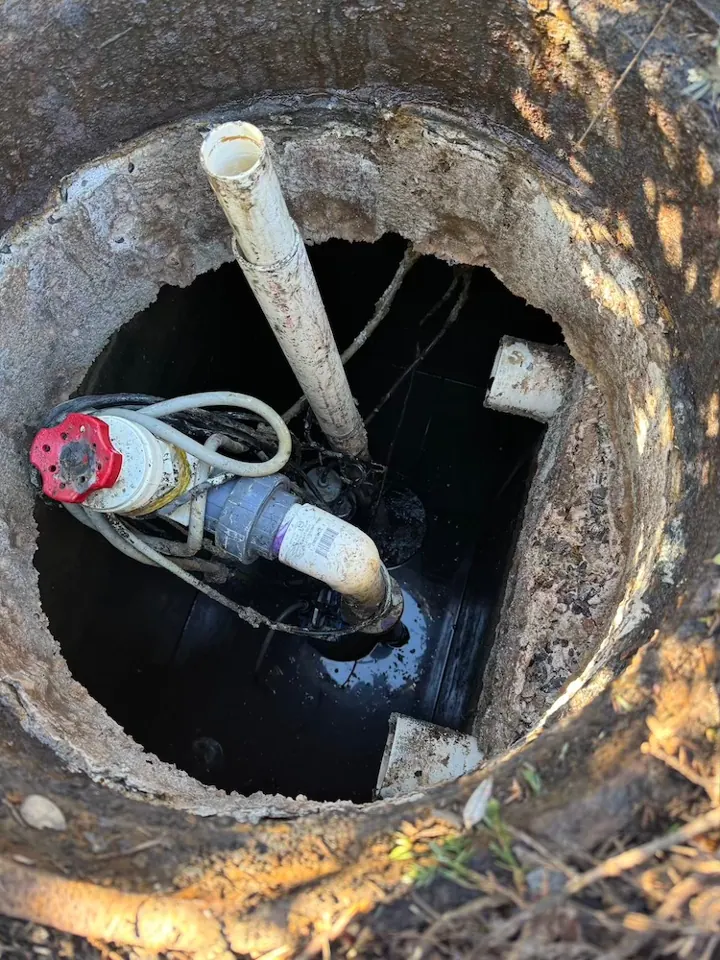
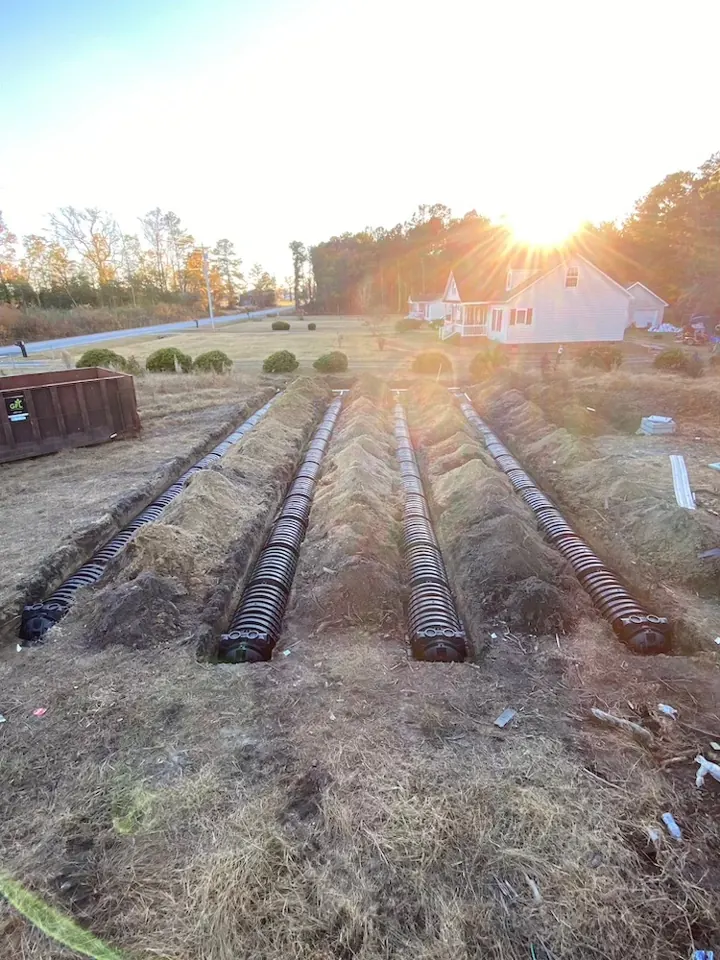
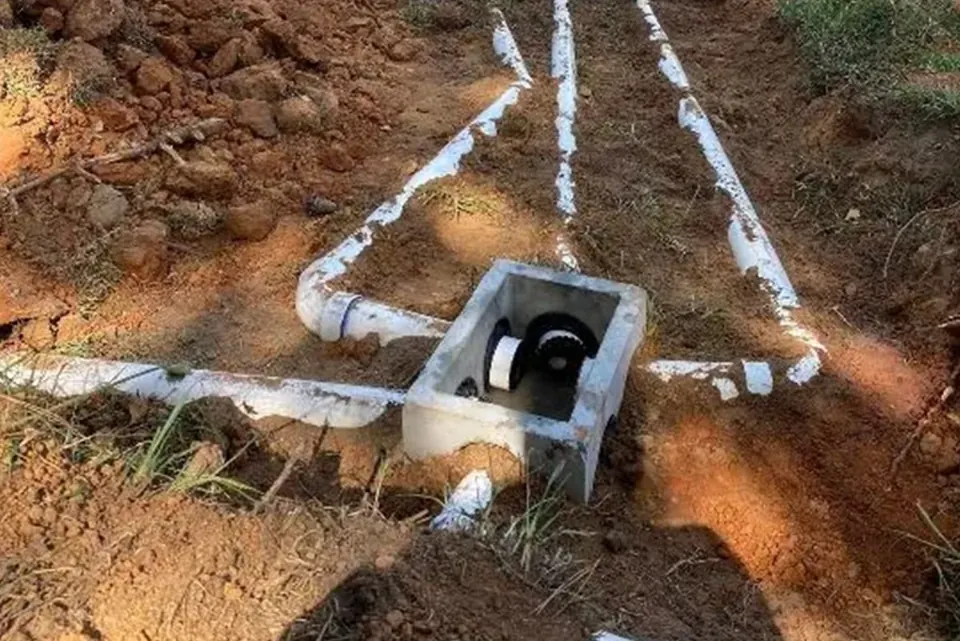
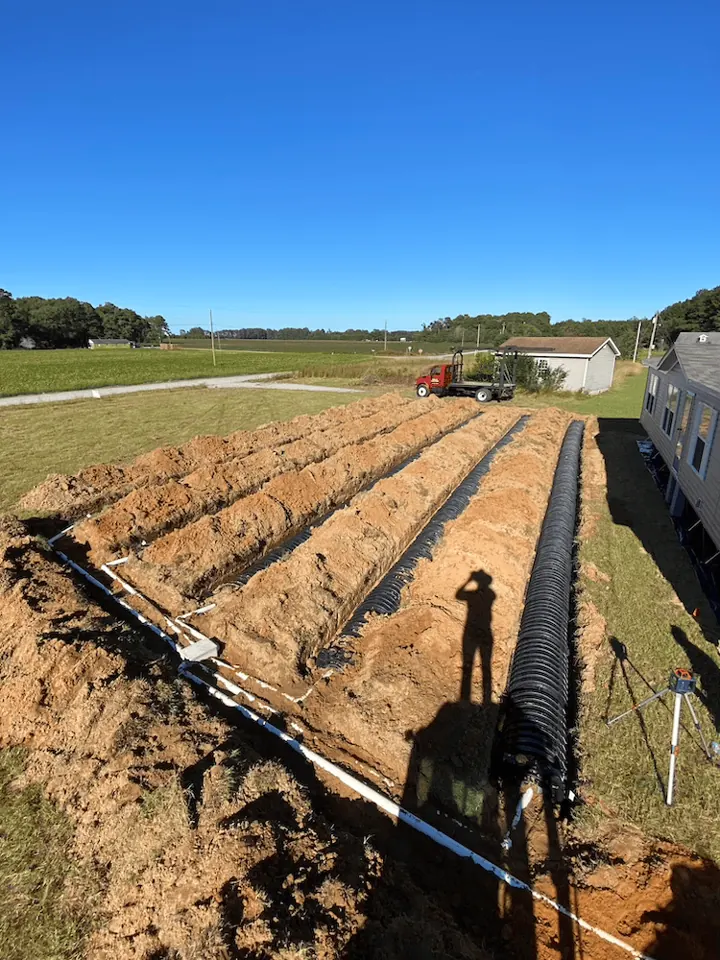
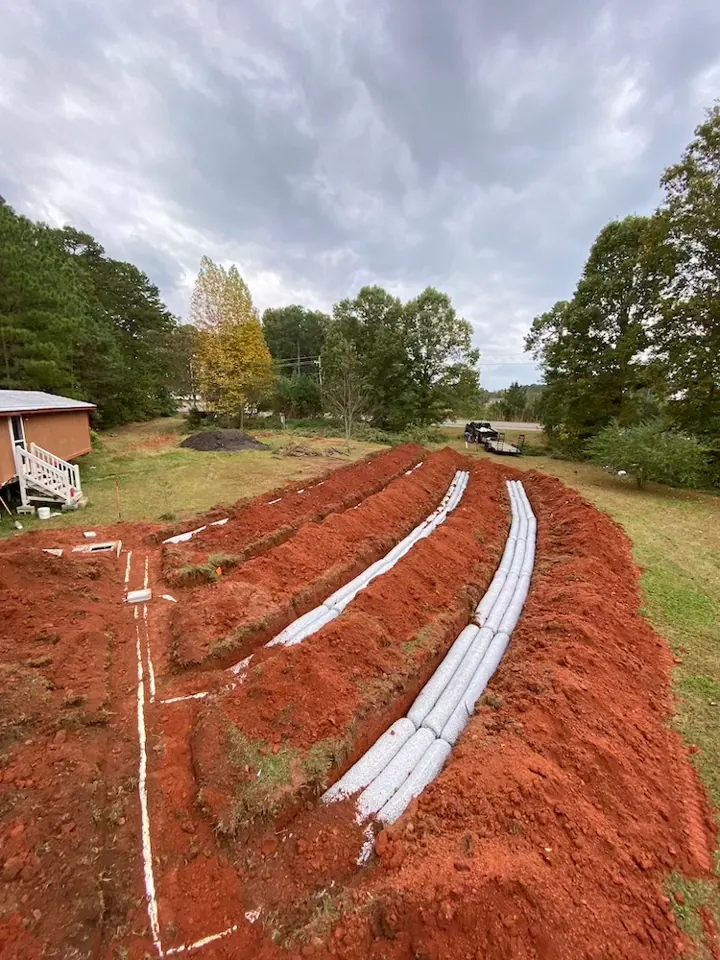
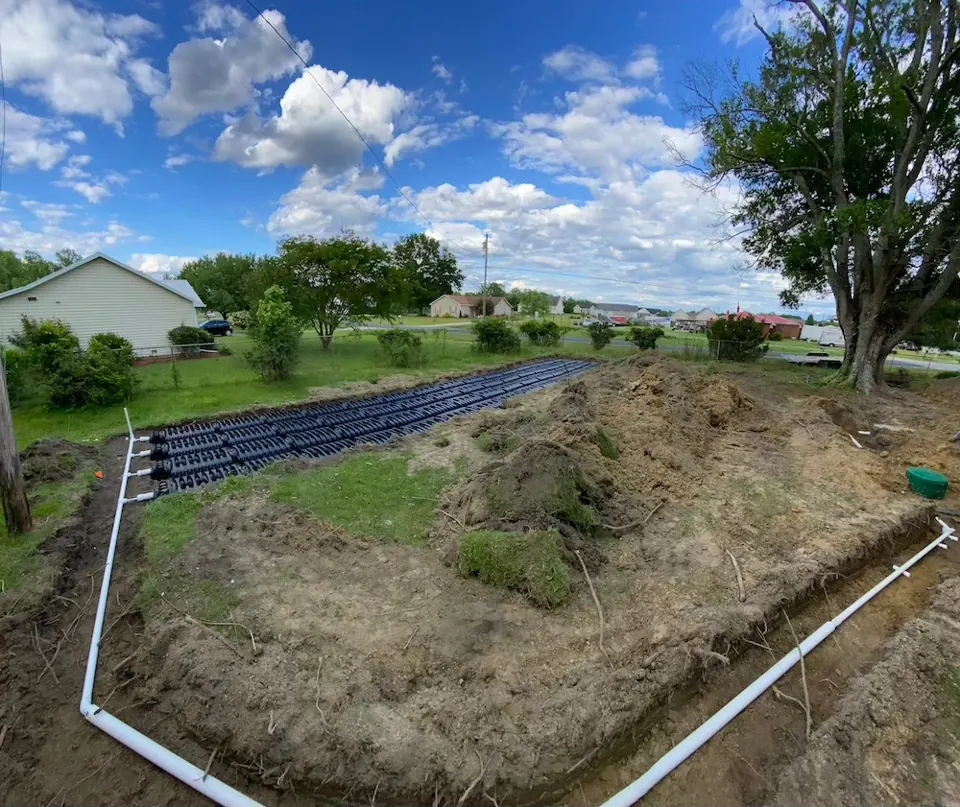
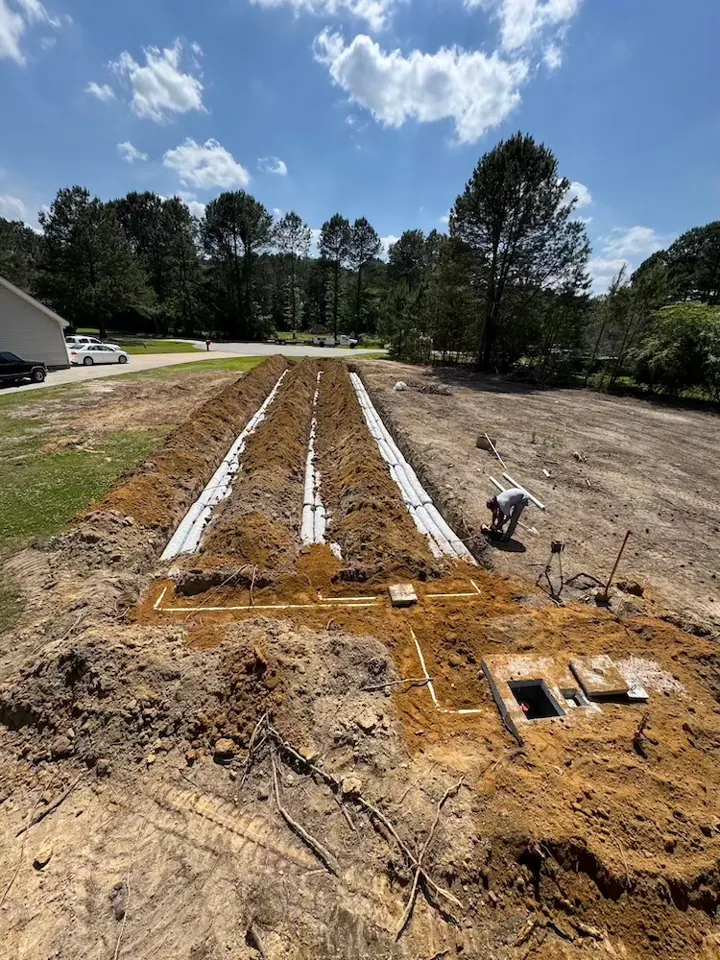
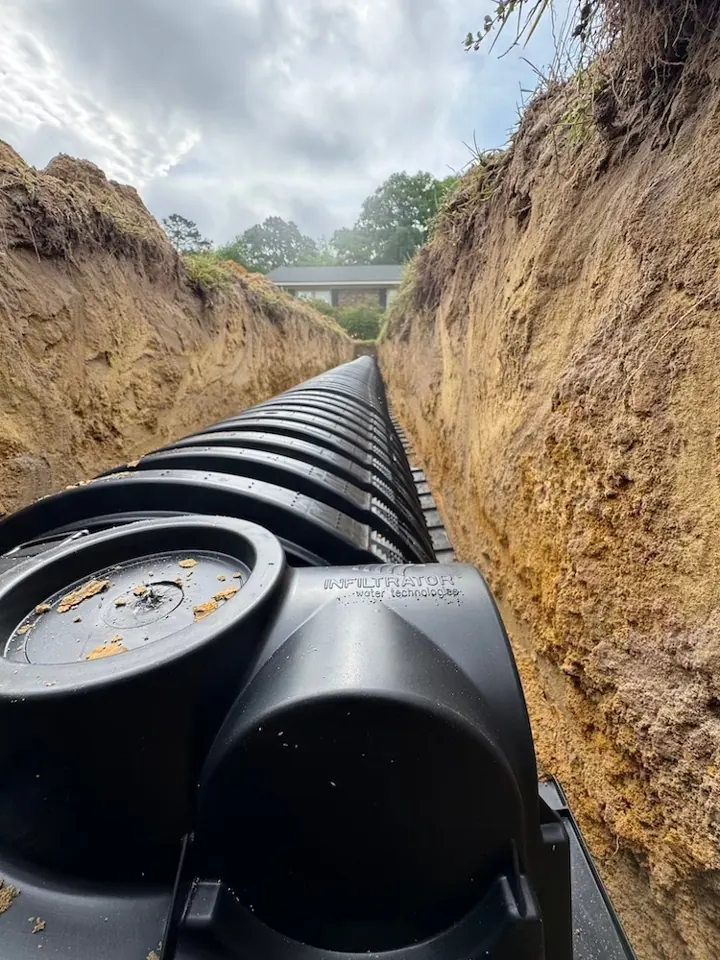
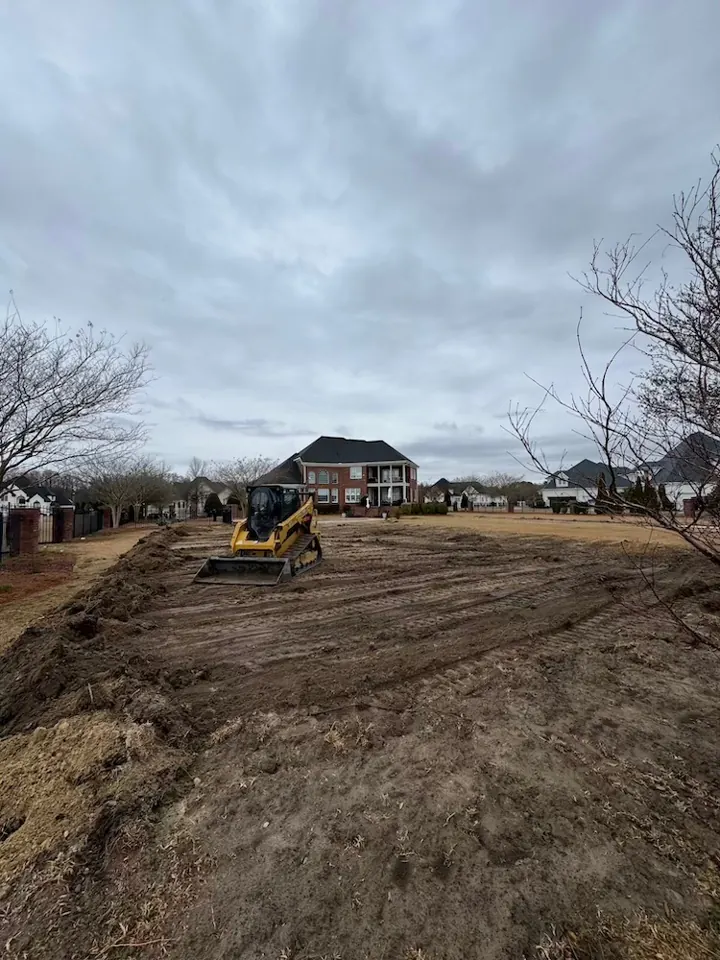
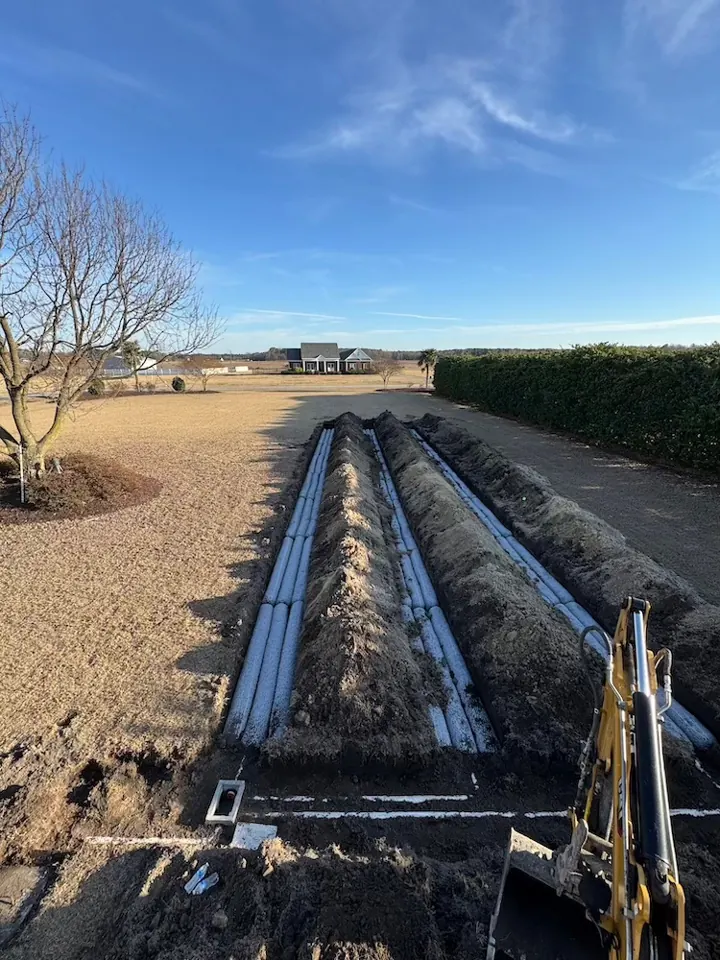
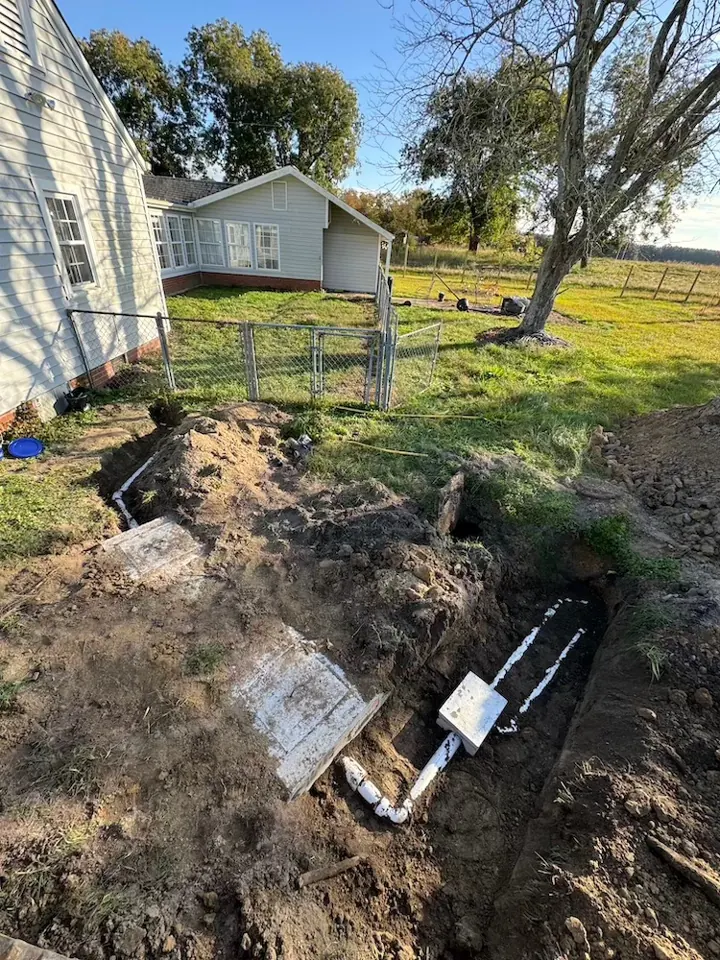
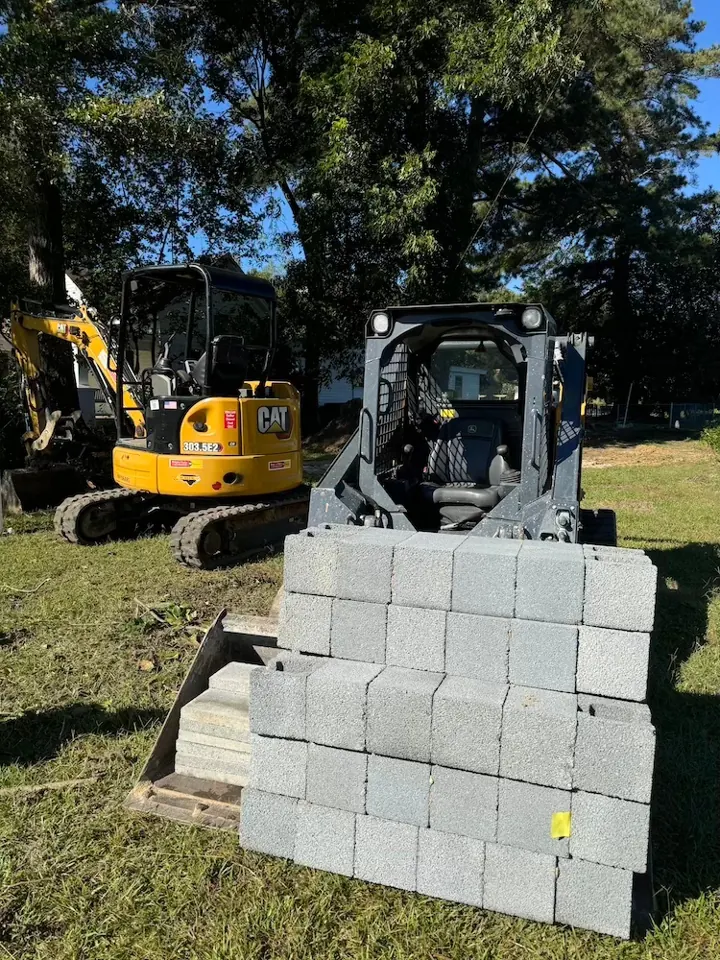
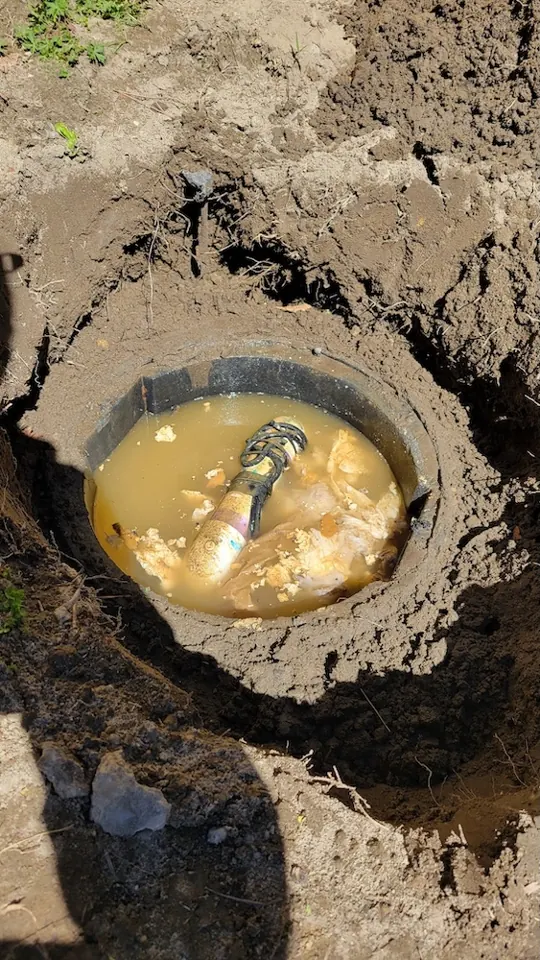
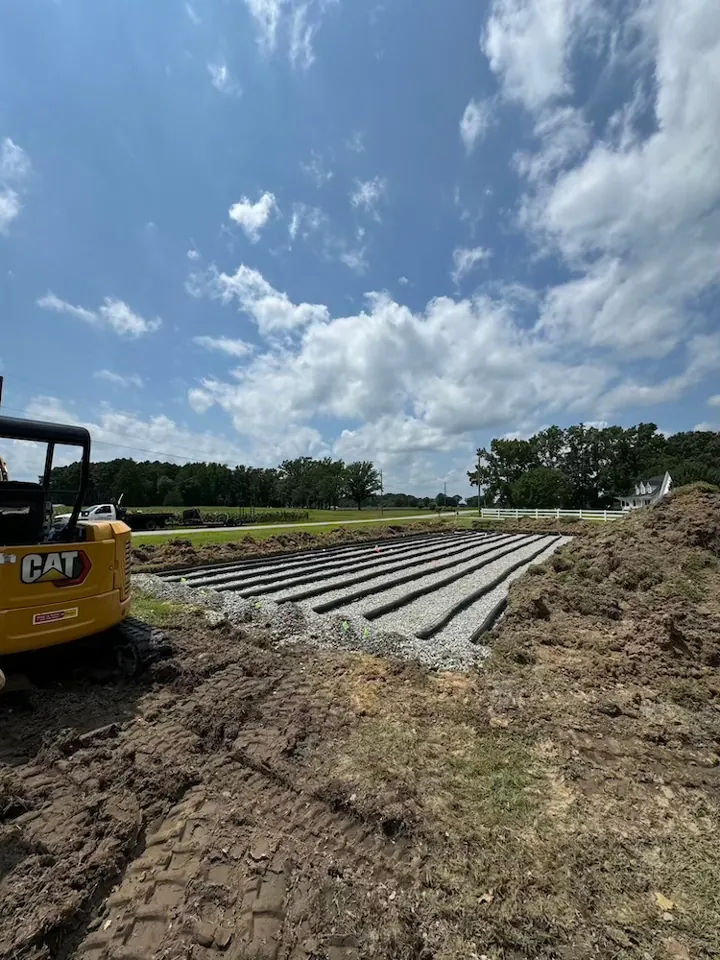
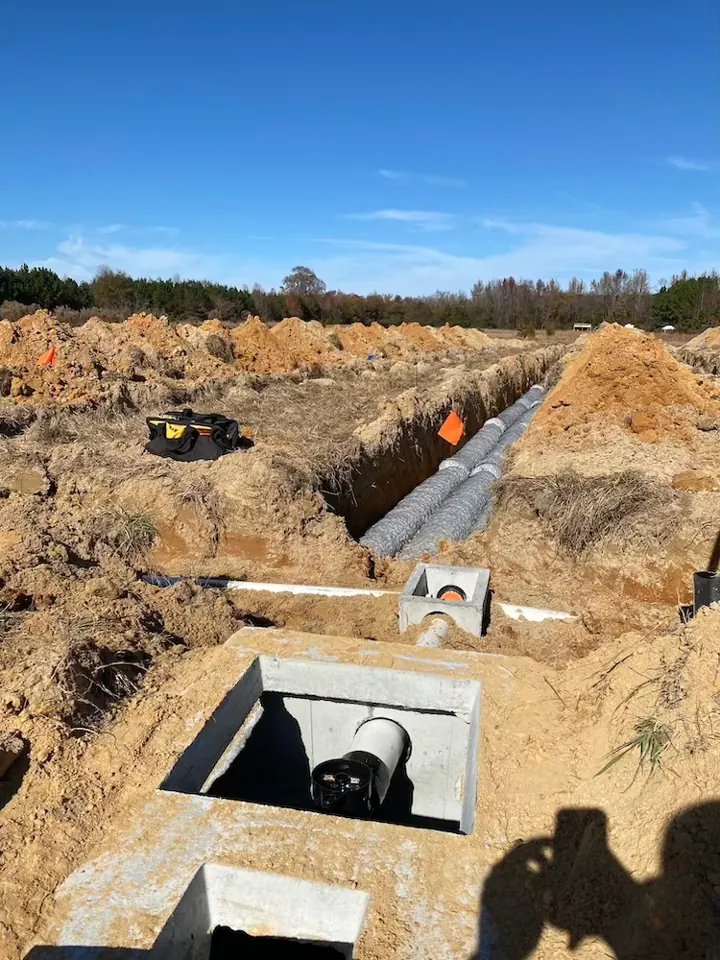
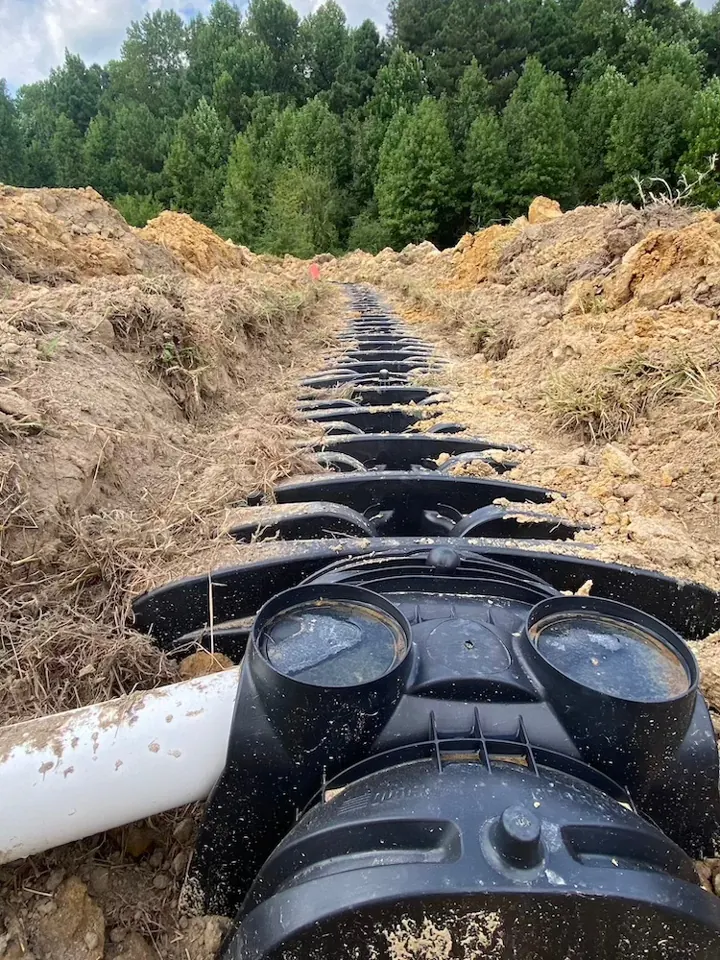
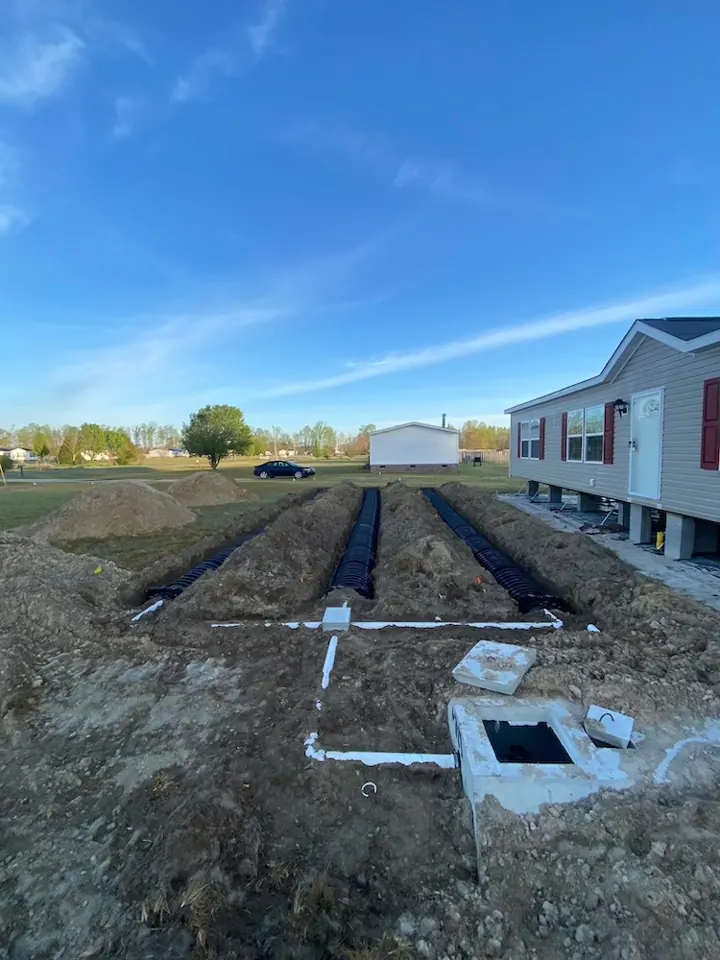
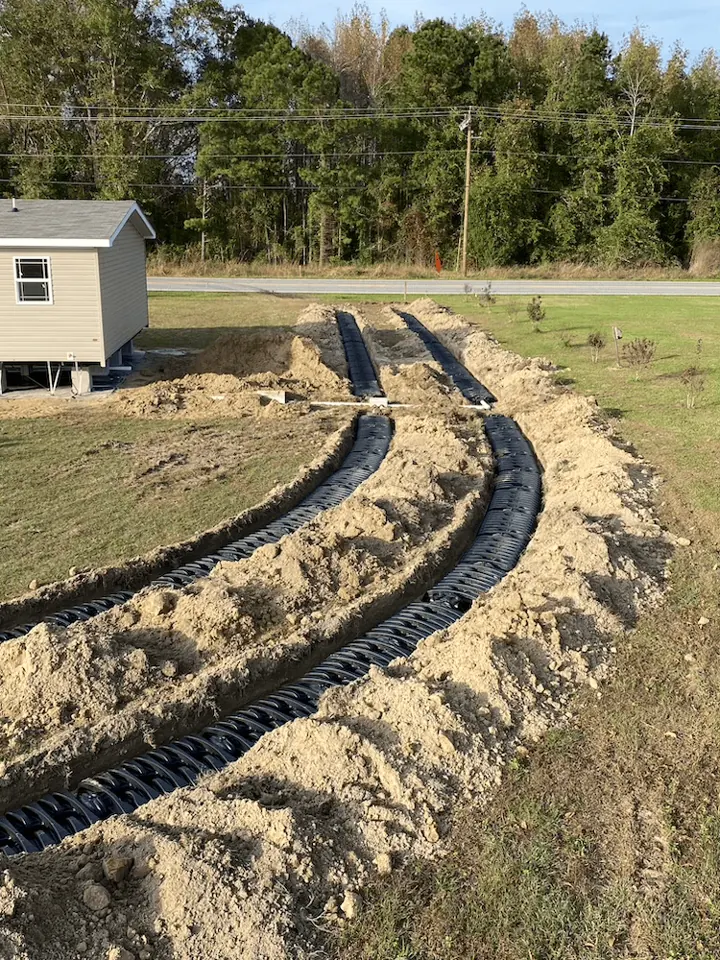
Open trenches, level tanks and clean fields, photographed on our own jobs before the county inspector signed off and the ground was covered. These are the systems we build; no stock photos.
See all 42 job photos
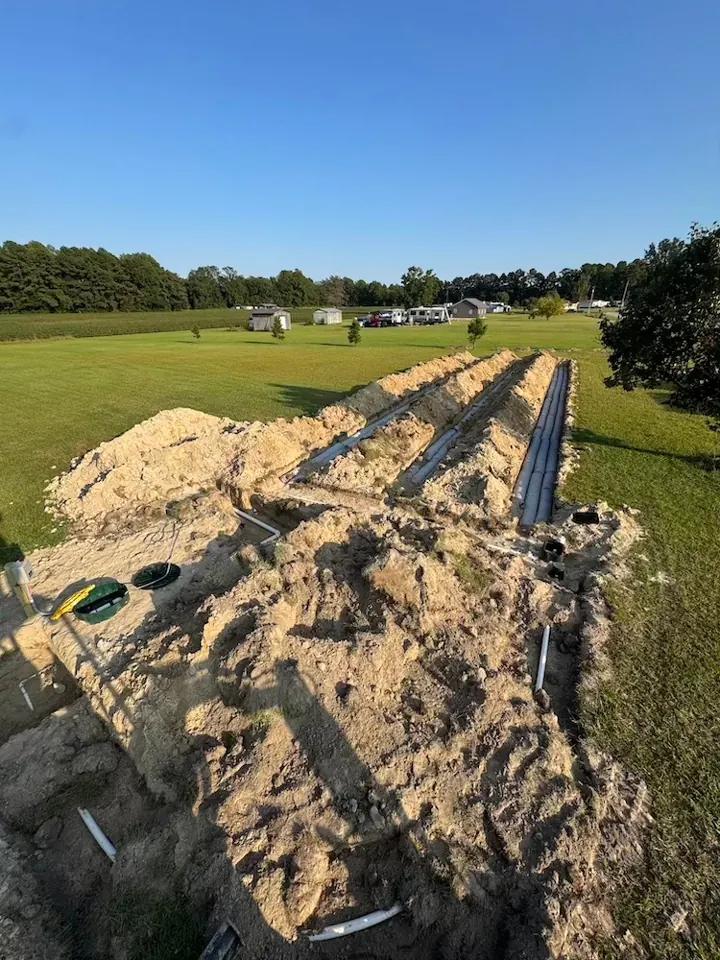
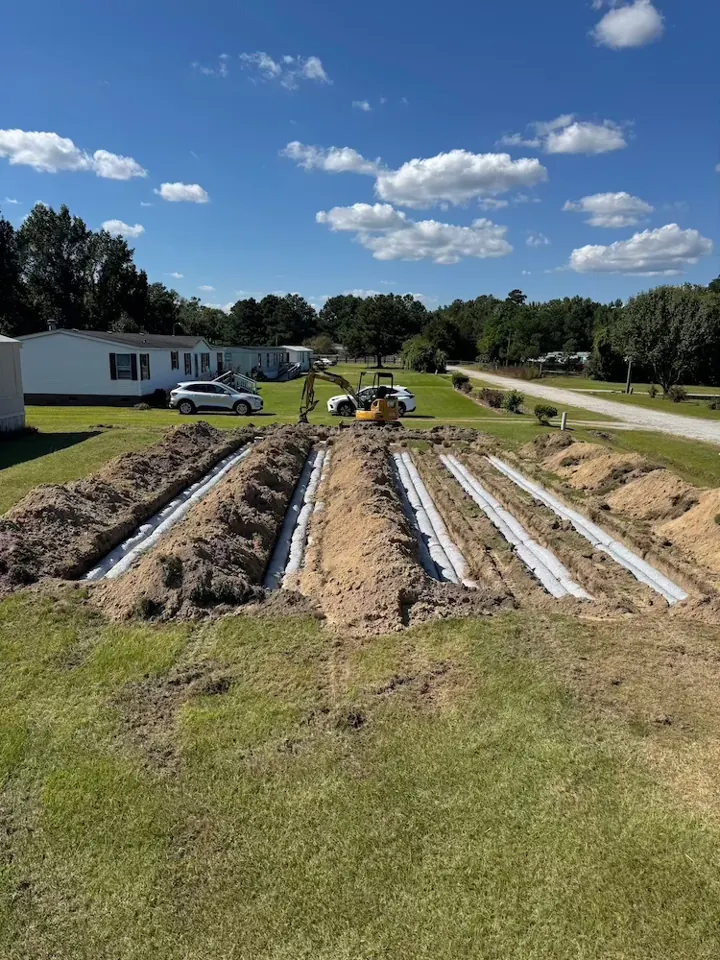
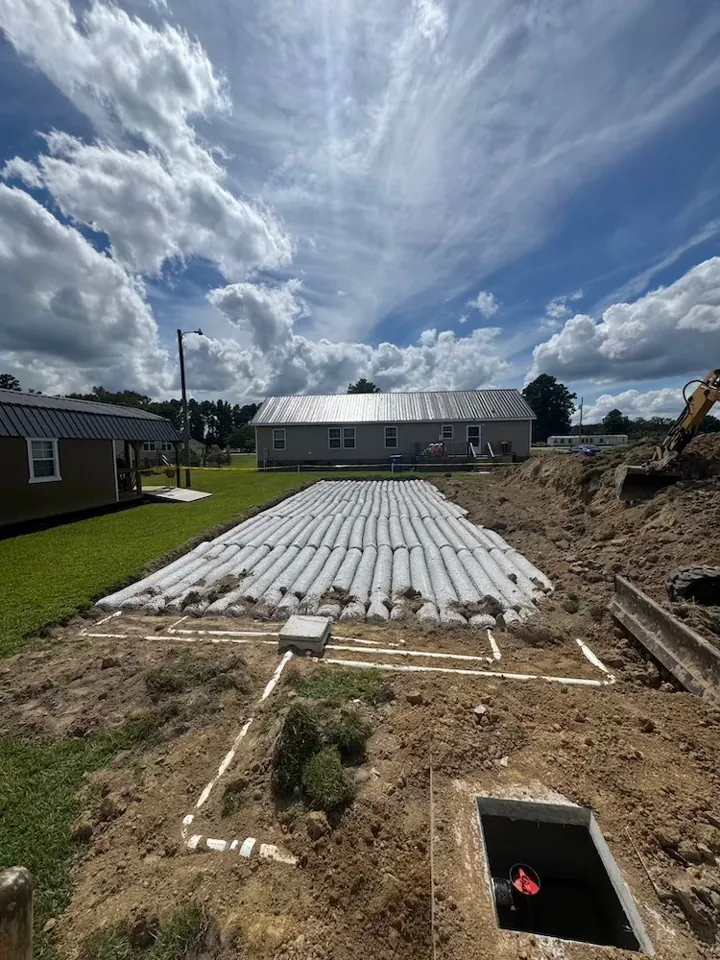
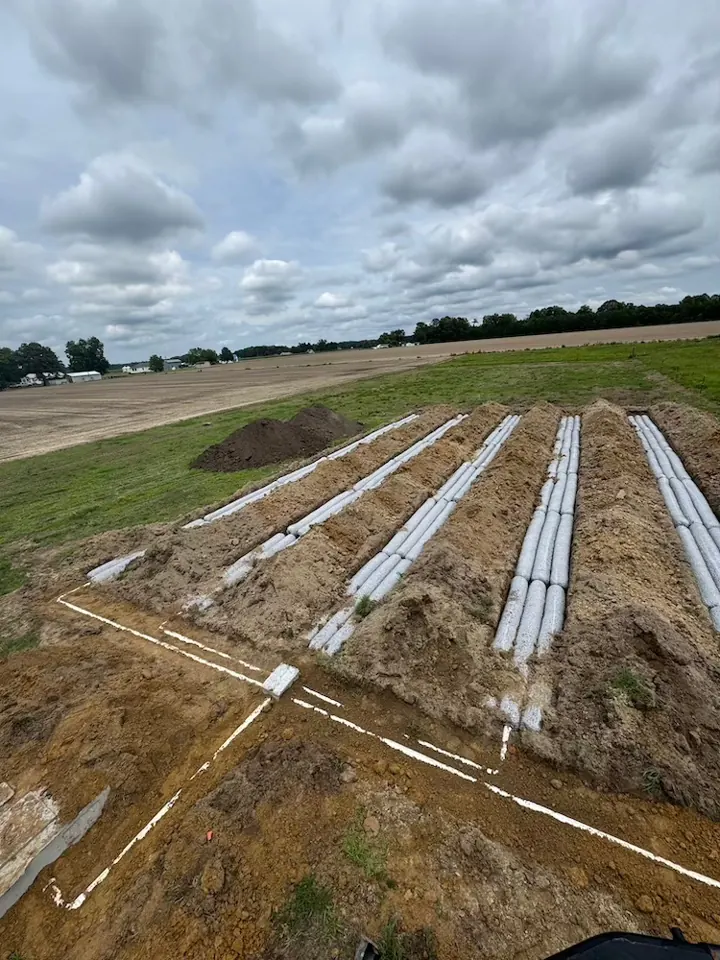
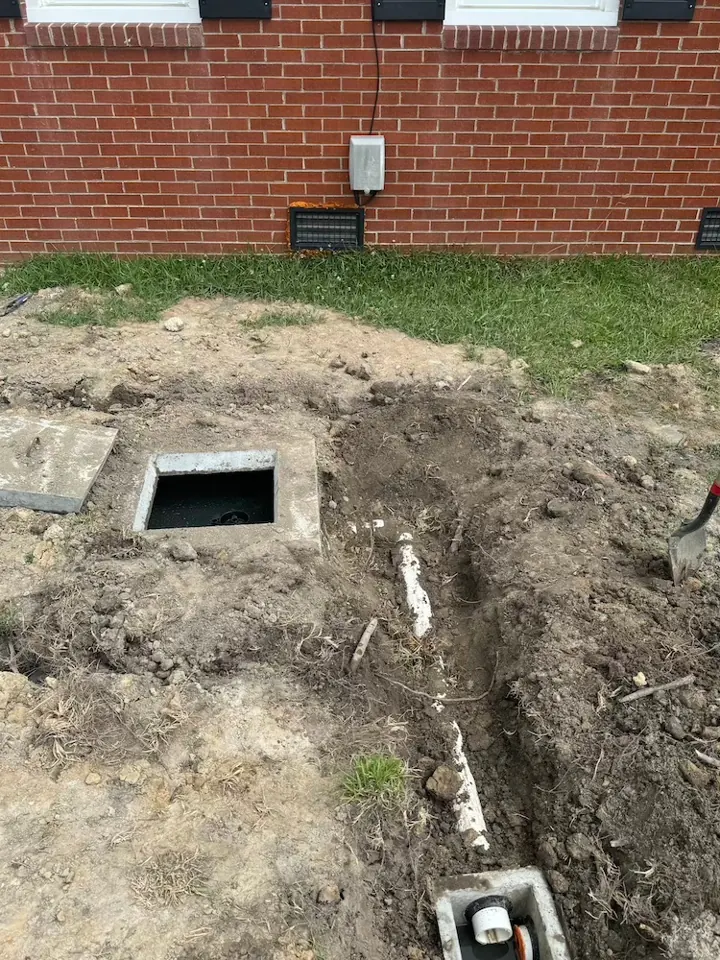
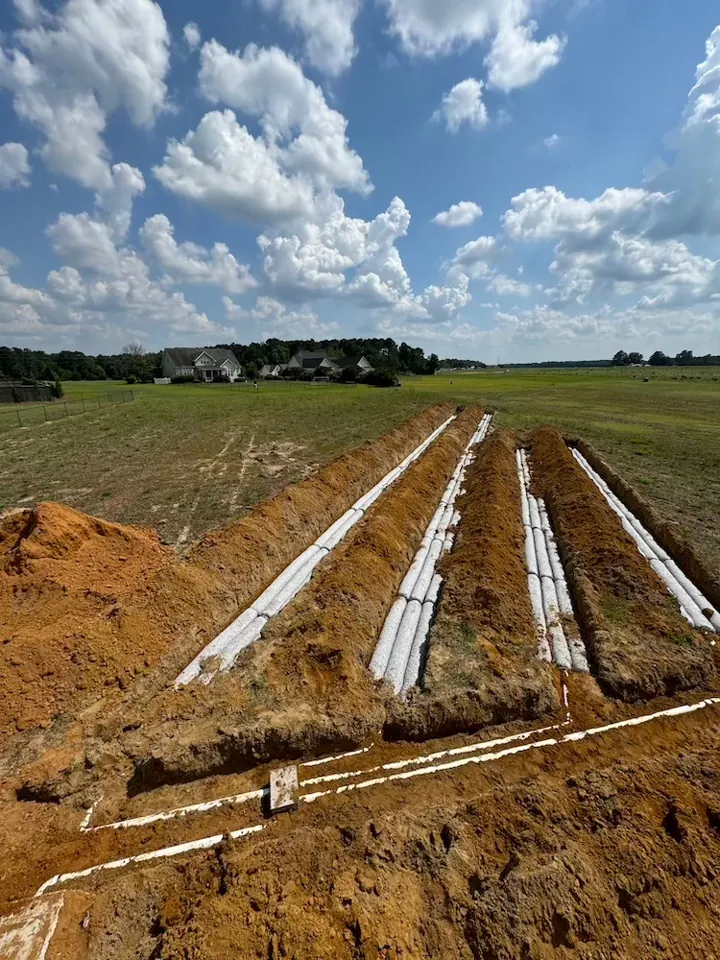
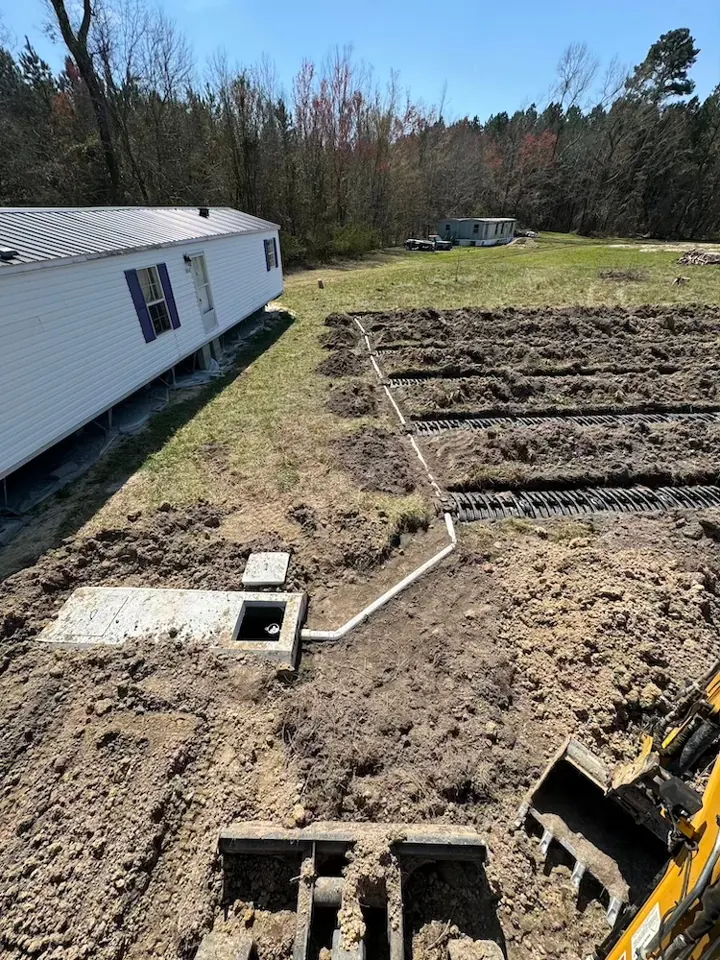
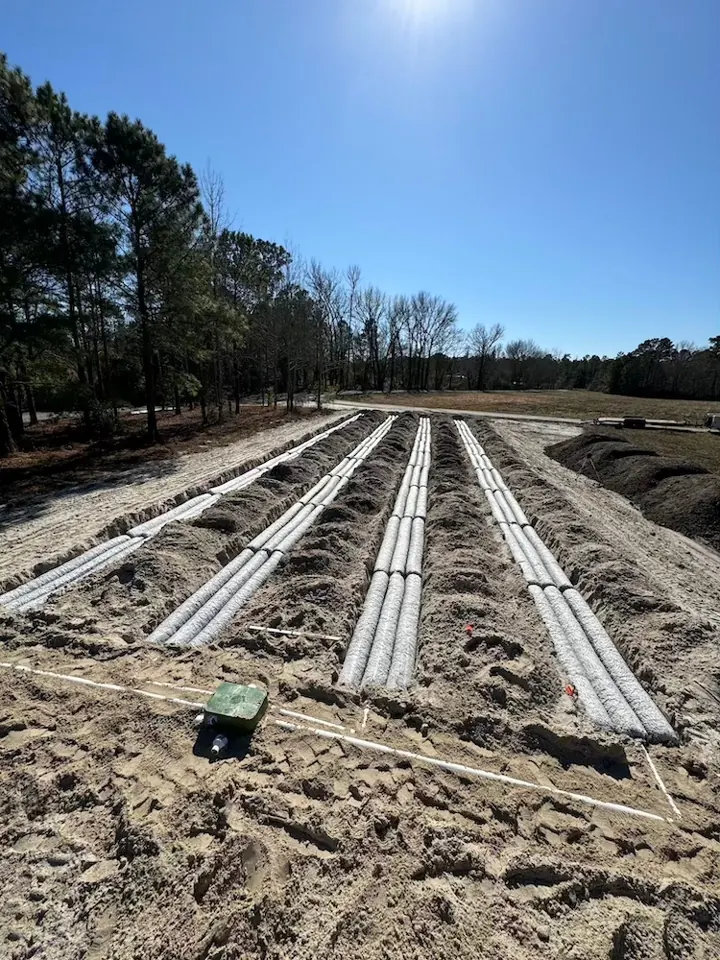
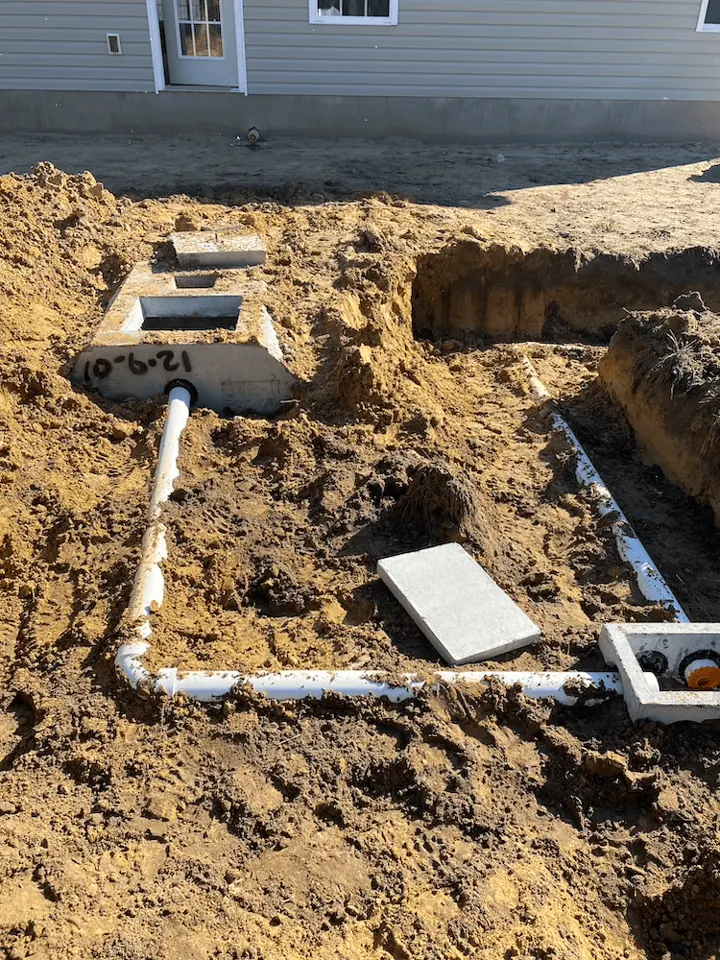
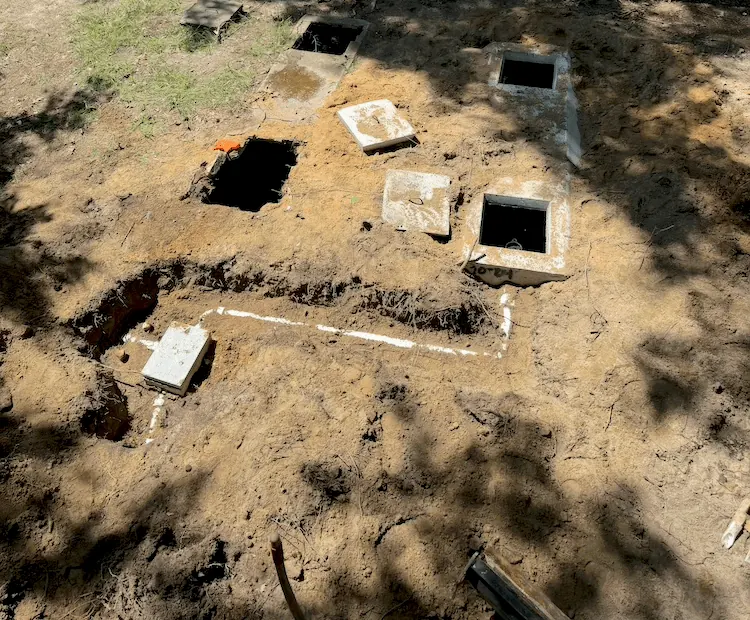
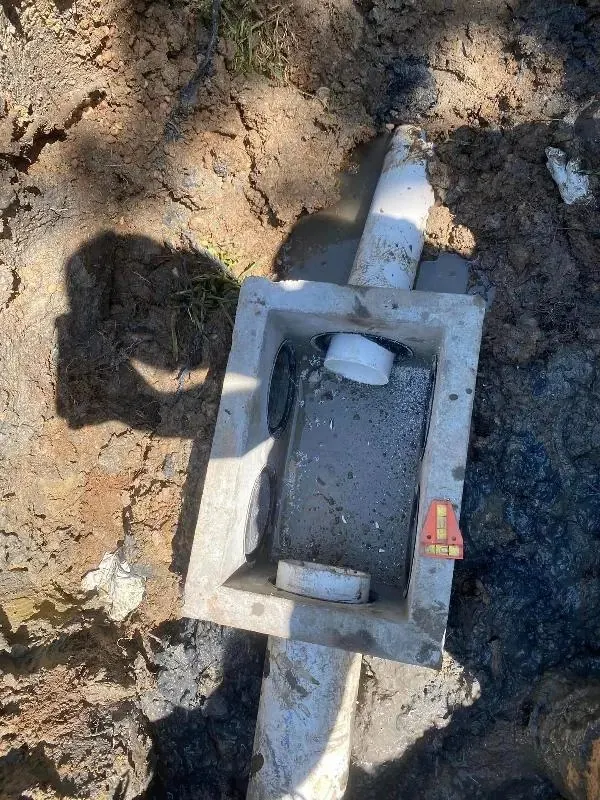
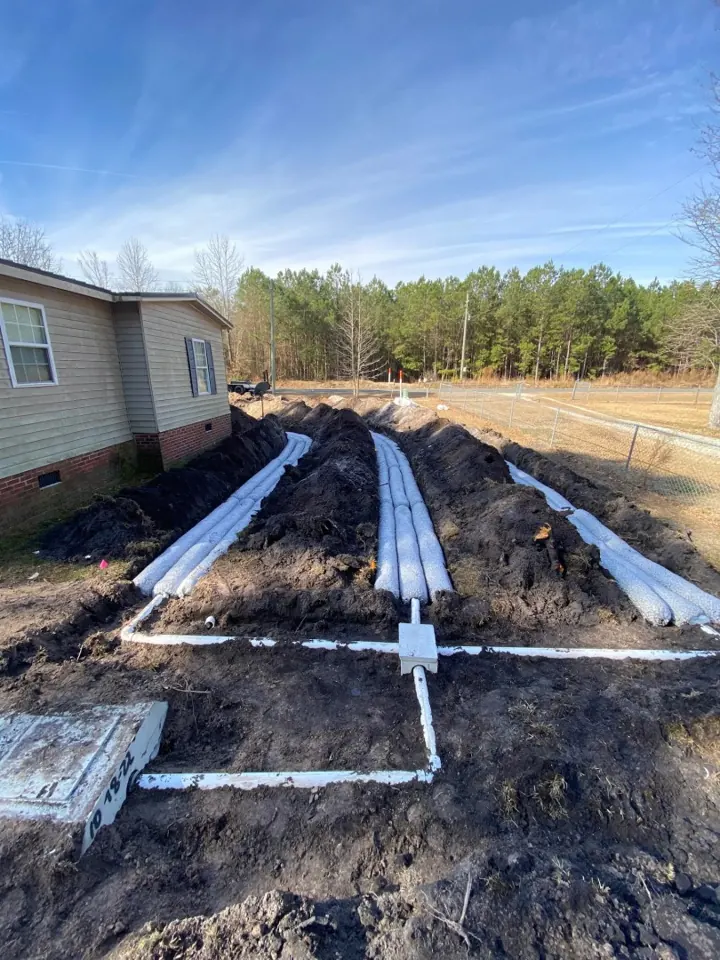
Why do homeowners call us for septic work?
- Established 2021Augusta company since 2021
- Open 24/7Phone answered day and night
- Free itemized estimateEach part of the job on its own line
- Inspected before backfillEvery trench open until sign-off
Which Augusta soils give a septic field trouble?
Mostly the wet ones. A soil series even carries the city's name: the Augusta series, a stream terrace soil that is somewhat poorly drained and holds a seasonal high water table 12 to 24 inches down from December through May.
A drain field dug into ground like that in a dry August can be sitting in water by March. The fix is a shallower or longer field, or a different design, and it has to be decided before the permit, not after the first backup.
Sandy ground has its own catch. The USDA uses Augusta's two airports as climate stations for its Sand Hills site descriptions, which describe soils that start sandy or loamy and turn finer with depth, and hillside seeps that keep a water table within a foot of the surface from November through April. A dry-looking slope can still be wet a few feet down.
Underneath it all, the city sits where the Savannah River crosses the Fall Line (New Georgia Encyclopedia), so red clay and pale sand can show up on neighboring lots. That is why we read the soil report before we price anything.
How does a septic tank installation run from first call to final inspection?
Five steps, in this order: site visit and estimate, soil evaluation, county permit, installation, and inspection before backfill. Skipping ahead is how systems fail early.
Site visit and free itemized estimate
We walk the lot, find the well, the property lines and the low spots, and write up each part of the job as its own line.
Soil evaluation by a certified classifier
Georgia requires soil evaluations to be done by people the Department of Public Health has certified. The report drives the size and type of field.
Construction permit from the county
Richmond County's environmental health office, one of the county offices in the Department of Public Health's East Central Health District, issues the permit once its site inspection shows workable soil, absorption and groundwater conditions.
Installation
Tank set level on firm bottom, lines run to the distribution box, trenches cut to the depth on the permit, and the pump tank wired if there is one.
Inspection, then backfill
The county inspects with everything open. Only after it passes do we cover the system, crown the trenches and seed or straw the disturbed ground.
Which towns around Augusta do we cover?
Augusta, Hephzibah and Blythe in Richmond County, and Evans, Martinez, Grovetown, Harlem and Appling in Columbia County. We do not take South Carolina jobs.
Each county has its own permit office, so the paperwork route depends on which side of the county line the lot sits. The service area page lists both offices, and the Columbia County page covers the steps there. Each town also has its own page:
- Evans, GALots past the sewered core: larger homesites and lake-area neighborhoods.
- Martinez, GAReplacement and repair for established homes that never got a sewer tap.
- Grovetown, GAThe city is sewered; we cover county lots outside its limits near Fort Gordon.
- Harlem, GARural corridor lots on county water, hillside fields and the McDuffie line.
- Appling, GACountry acreage where a well, a tank and a field share the land.
- Hephzibah, GACity water, sewer only near the center, and large-lot zoning on the Fall Line.
- Blythe, GANo public sewer at all, one-acre lots and many manufactured homes.
Will a tank or field fit where you want it?
Georgia sets minimum distances. A septic tank has to sit at least 50 feet from any well, and a drain field at least 100 feet. Property lines, water lines, ponds and foundations each have their own minimums.
The setback planner draws those rings to scale around the spot you have in mind and flags anything that falls short. It is worth five minutes before you set a house pad or sign on a lot.
Septic installation questions we hear in Augusta
Do I need a permit to install a septic system in Augusta?
Who is allowed to install it?
How big does my septic tank need to be?
Can the inspector see the system before it is covered?
Does Augusta ground make septic harder?
What does an estimate include?
Visits by appointment only. We come to your property; there is no walk-in office.
Tell us where the system goes
Give us the address and a line about the job. Expect a call back within one business day to book a time on site; your free itemized estimate is written after that visit.