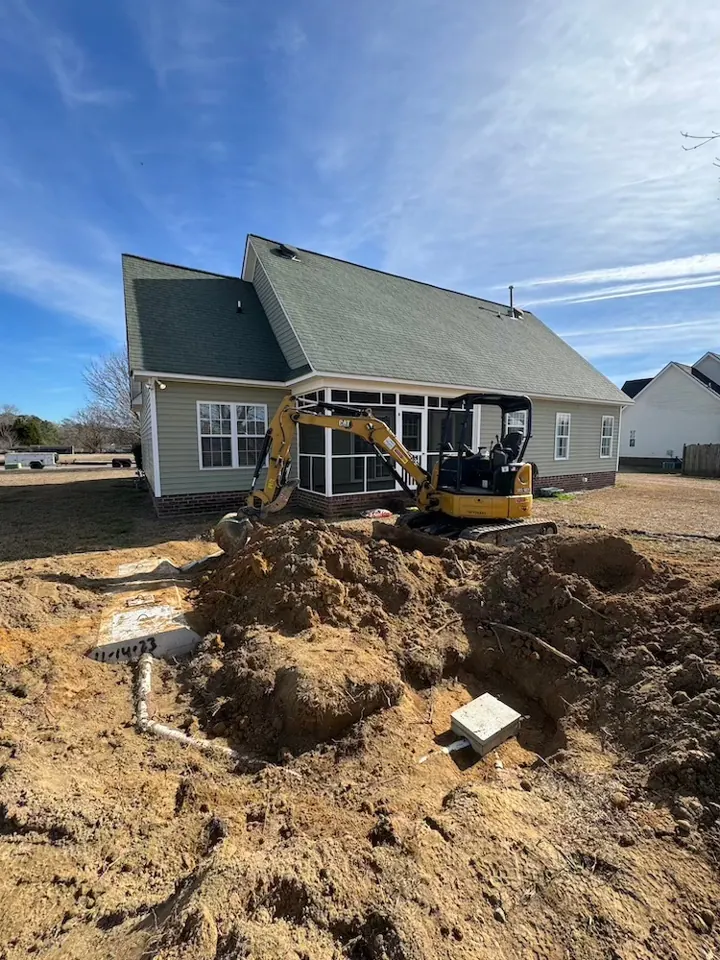
What does it take to put septic on a new Augusta homesite?
A new house on a lot without sewer needs a soil evaluation, a construction permit from the Richmond County environmental health office, a system sized to the bedroom count, and an inspection before anything is covered. Get the soil logged before the house is staked, since the best field ground often decides where the foundation can sit.
Before you plan around septic at all, ask Augusta Utilities whether a sewer main serves the parcel. Tying in may be the cheaper path, or it may not be offered at that address.
This page covers new construction for a site-built home. For a manufactured home see mobile home septic. For an existing house with a failing system see septic tank replacement.
What happens first, second and third?
Soil first, permit second, house pad third. Builders who reverse that order end up moving foundations or paying for a pumped system they did not need.
Pick two possible field areas
Before you settle the house footprint, we look for the highest, best drained ground away from wells and creeks. A second area helps if the first fails.
Soil evaluation
Georgia's Rule 511-3-1-.03(7) requires soil evaluations to be done by individuals certified by the Department. The classifier digs or bores and logs each layer.
Permit application
The county reviews the soil report, the bedroom count and a site plan. Under Rule 511-3-1-.03(3), a permit is issued only after a site inspection shows favorable soil, absorption and groundwater findings.
House pad and rough grading
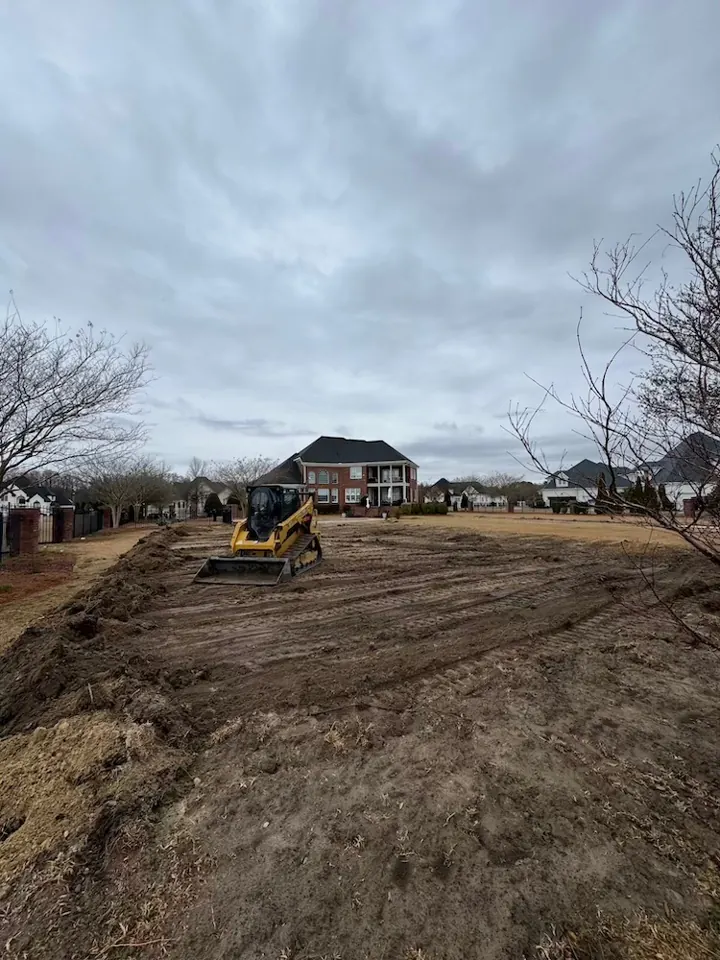
Now the builder can set the pad, keeping equipment off the marked field area.
Installation
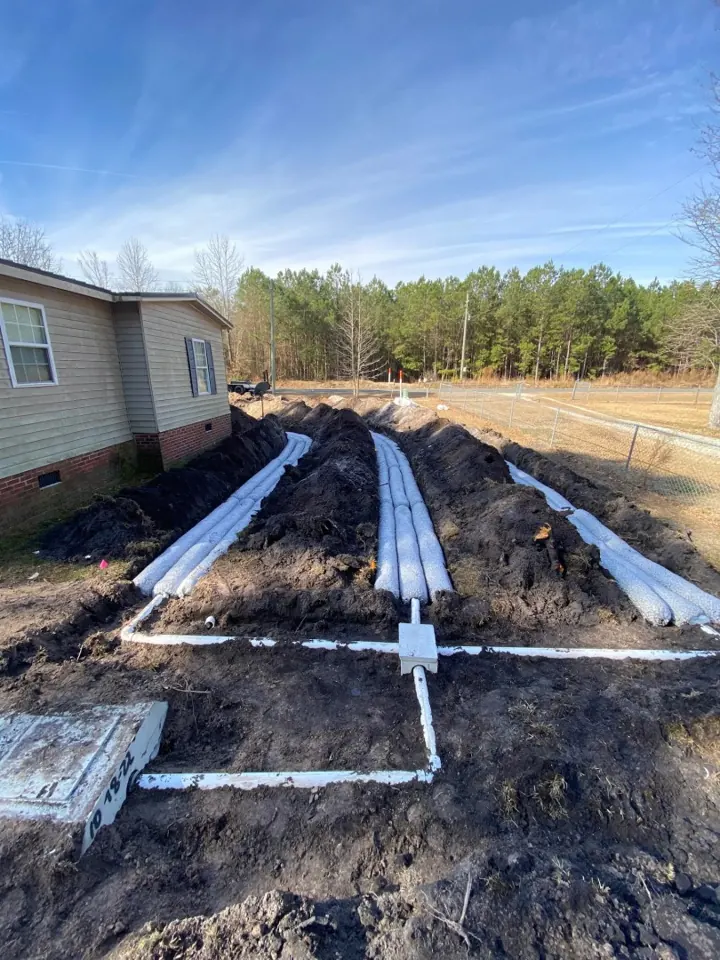
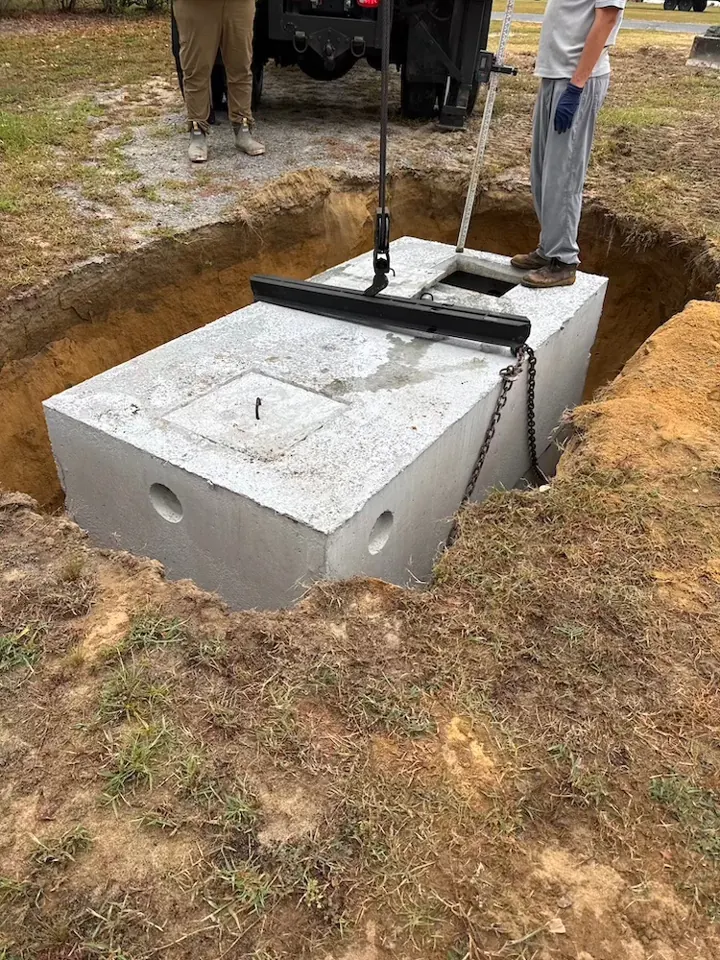
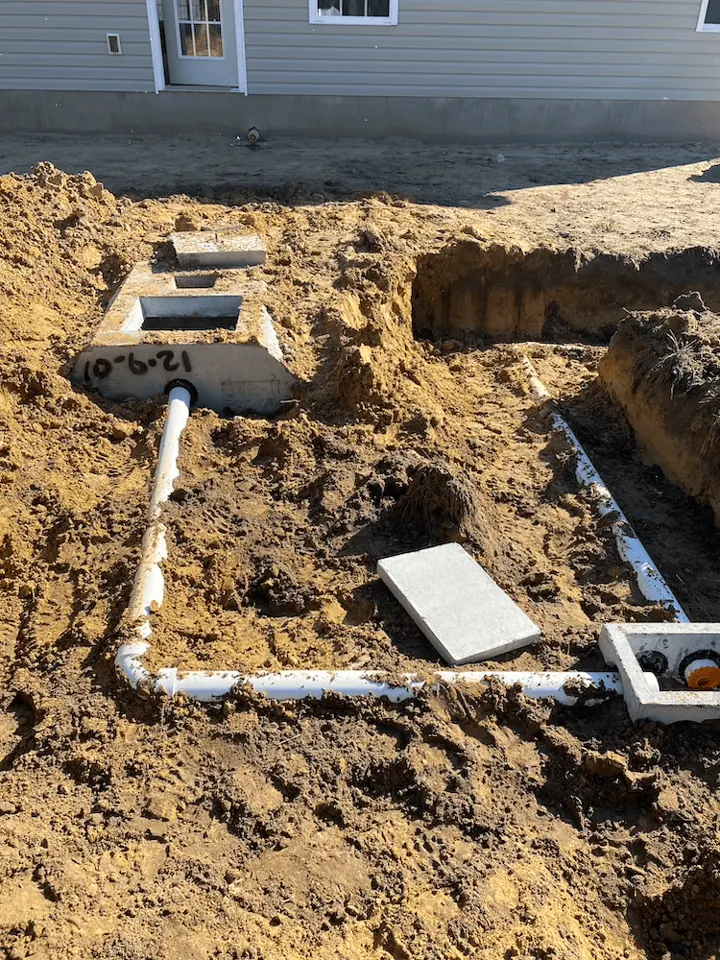
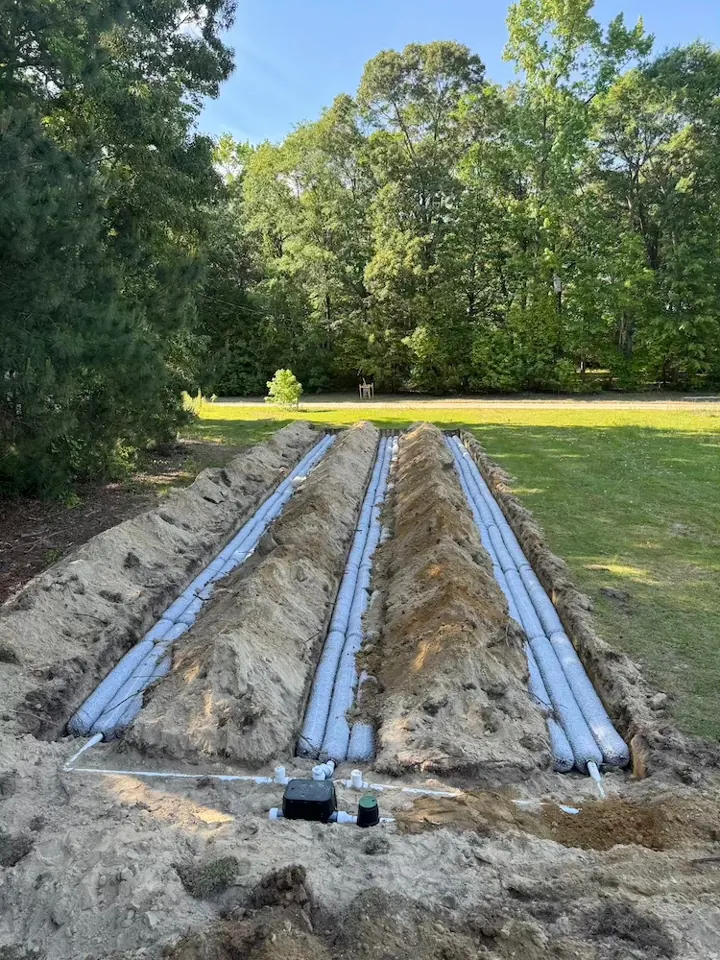
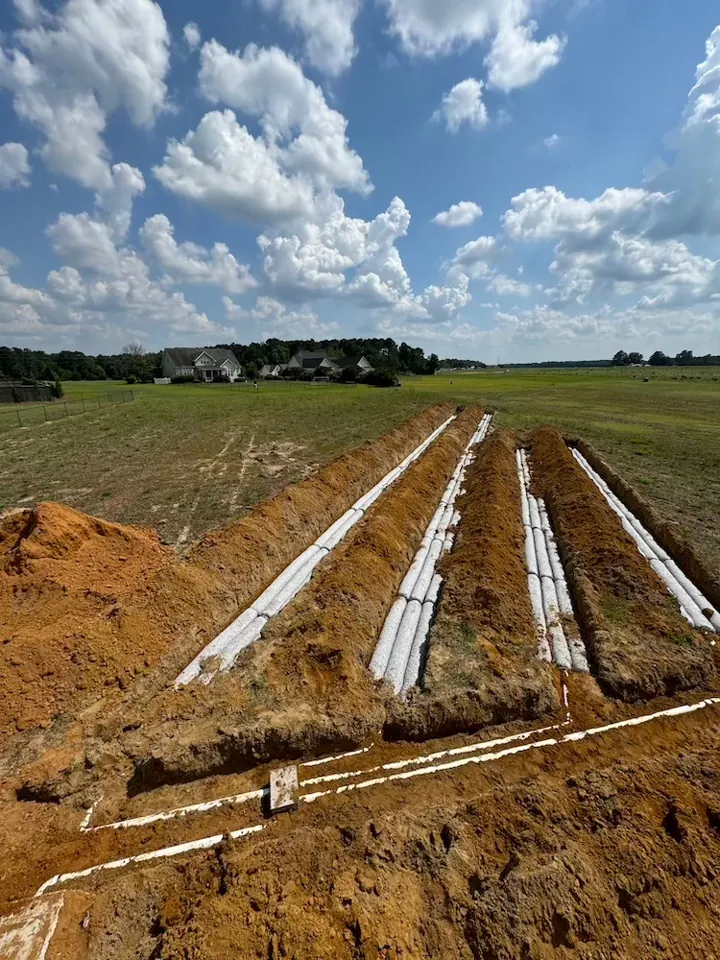
Tank, building sewer, distribution box and field, laid to the depths on the permit.
Final inspection, then backfill
Rule 511-3-1-.03(4) says no one may backfill or use the system until the final inspection is done.
How big does the tank need to be for a new house?
For a single-family home, Georgia's minimum is 1,000 gallons for one to four bedrooms, plus 250 gallons for each bedroom over four, plus 50 percent if the kitchen has a garbage grinder. Use the calculator below with your floor plan.
Pick a bedroom count to see the state minimum tank size.
That figure comes from Rule 511-3-1-.05(3). It is a floor, not a design. The field is sized separately from the soil report, and the county can require more when site conditions call for it. If you are on the fence about a fifth bedroom, size for it now. Adding capacity after the fact means digging up the yard.
What does Augusta soil do to a new system?
It decides the field type and length. Deep, dry sand usually takes water readily. Red clay takes it slowly. Stream terrace soils near creeks can hold a high water table for months at a time.
The Augusta soil series, found on stream terraces in the Piedmont and Upper Coastal Plain, is somewhat poorly drained, with a seasonal high water table 12 to 24 inches down from December through May. A homesite with that kind of soil may need a shallower field, more field area, or an alternative design. On sloping sandy ground, watch for the hillside seeps the USDA Sand Hills description mentions, wet from November through April.
None of that is a reason to skip a lot. It is a reason to know before you close. The soil evaluation page covers what the classifier looks for.
Where can the tank and field go on the lot?
Where the soil is good and the state's minimum distances are met. Under Georgia's rules a tank sits at least 50 feet from a well and 10 feet from property lines; a drain field sits at least 100 feet from a well and 5 feet from property lines.
Ponds, lakes and streams push the tank back 25 feet and the field back 50 feet. A building with a basement needs 10 feet from the field. Those figures come from Rules 511-3-1-.05(2) and .07(3). The setback planner draws them to scale so you can test a spot before the surveyor stakes the house.
Count a neighbor’s well, too. The rule applies to existing or proposed wells, not only yours.
What goes into a new construction estimate?
Each piece of the job as its own line: tank, field, distribution box, building sewer from the house stub, any pump tank and alarm, earthwork, and the permit and inspection steps. That is what we mean by a free itemized estimate.
Seeing it that way lets you compare bids honestly and spot the item that changed when the soil report came back. The cost factors page explains what moves each line.